 Free entry
Flagle
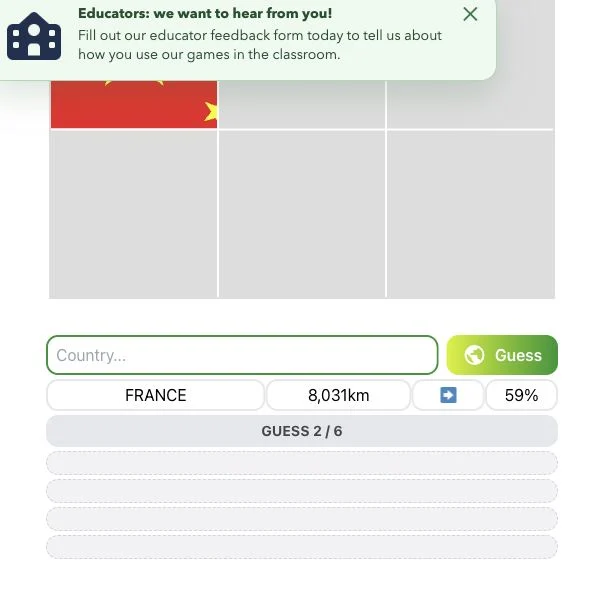
Guess the country as more of its flag is revealed.
Flags
The narrowest square is often the best place to begin. Separate the flag’s appearance from the country facts before submitting a candidate.
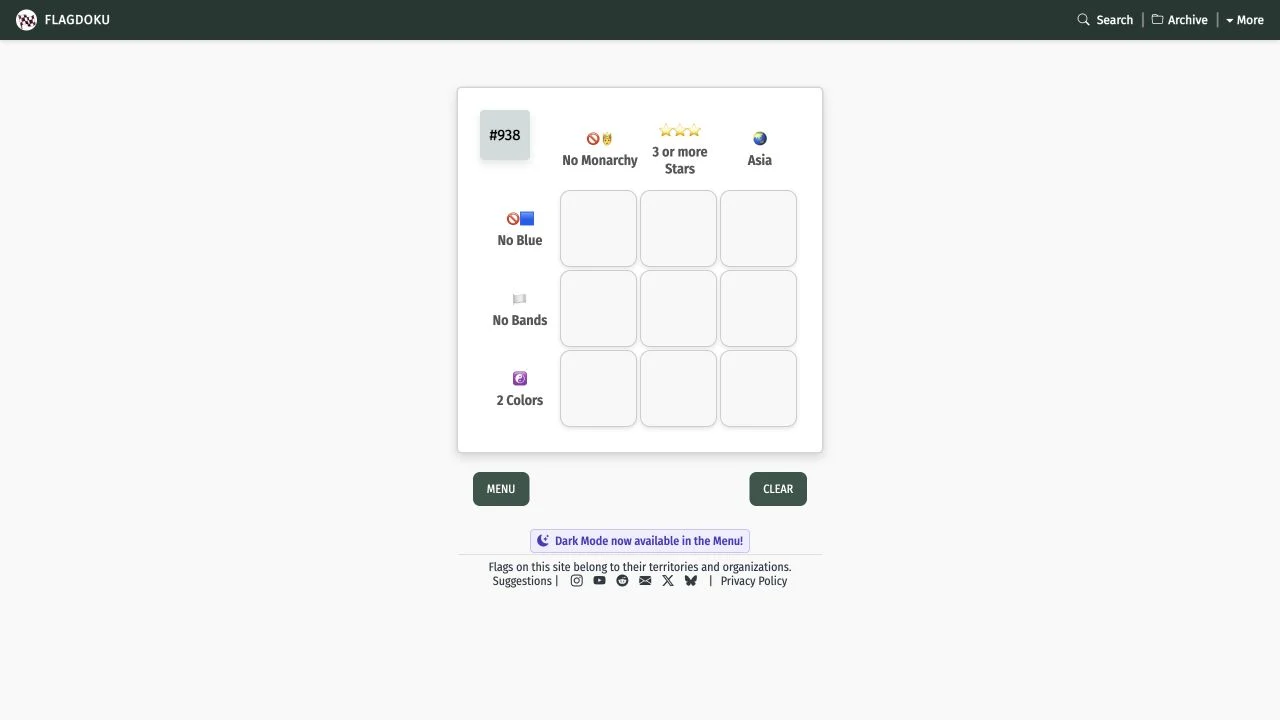
Flagdoku turns flag knowledge into a criterion grid. The inspected board had nine cells and intersecting rules such as geographic region, monarchy status, star count, color exclusions and number of colors. A flag must satisfy both the row and column criteria for its square.
This rewards a different skill from recognizing one displayed flag. You need to recall candidates and check their properties, sometimes under surprisingly restrictive combinations. Archive and additional flag-game links are visible, but the screenshot and guide focus on the daily grid.
A valid flag is the intersection of two sets. A broad rule such as Asia may leave many possibilities; combining it with no blue, a star count or a specific color total reduces that pool. The most constrained squares are useful starting points because they force you to inspect the criteria carefully.
Choose a square whose two rules suggest only a few candidates. Settling that interpretation makes broader cells easier to approach.
A small shield or symbol can introduce a color missing from the main stripes. Check the complete flag before assuming it has only two colors.
A star-count rule describes the flag, while a monarchy rule describes the country. Test both independently rather than inferring one from the other.
You know many flags and enjoy building an answer from intersecting visual and geographic constraints.
You are learning national flags for the first time. A recognition quiz supplies an image and shortlist that this recall grid does not.
Choose a different game based on the experience you want.
It must satisfy the selected cell’s row rule and column rule. Read both labels before answering.
No. The inspected board combined design rules with geographic and country-attribute criteria.