 Free entry
Flaggle
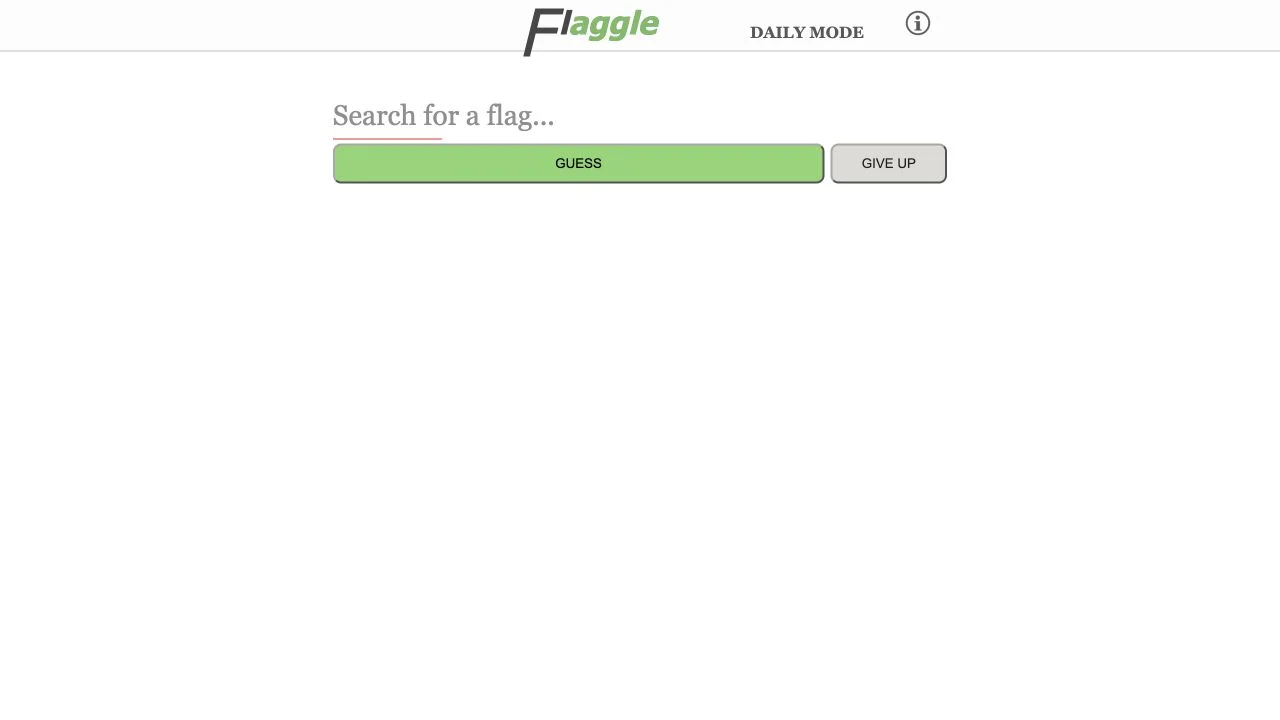
Compare a guessed flag with the target through a mask showing where their colors match.
Flags
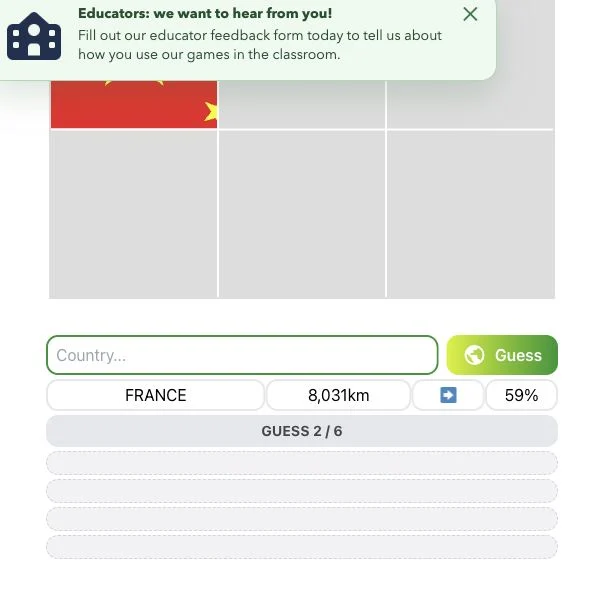
A few visible pixels can suggest several countries. Stripe order, symbol placement and each new reveal help you decide which flag actually fits, making this a focused exercise in visual detail.
Flagle gradually turns a flag fragment into a country-identification puzzle. A color or a corner of an emblem can narrow the possibilities, but similar tricolors make careful observation more useful than a quick familiar guess.
It is an approachable daily break with a clear visual task. Pay attention to where a color appears, not just which colors are present; the position of a stripe or symbol often separates flags that initially look alike.
A partial flag is an information problem: many countries share a color, but fewer share that color in the same position beside the same symbol. New reveals help you distinguish those candidates. Keep track of what the visible fragment actually proves, and what you have merely assumed about the rest of the design. A stripe, corner or emblem can be more informative than the flag’s overall palette.
Ask whether the visible color is at an edge, in a stripe or around a symbol. The placement can distinguish flags that use almost identical colors.
Think of several designs that fit the first reveal. When new pixels appear, eliminate incompatible candidates instead of immediately choosing another familiar country.
After a miss, compare the answer with the flag you guessed. Remember the stripe order, emblem or layout that separates the pair for the next visual puzzle.
You want a daily visual puzzle with a focused subject and a short decision loop. It works well for players who notice design details and want to connect flags with country names.
You want to learn locations or need to revise a whole flag set in one sitting. A daily reveal is a small challenge; a broader quiz catalog is better for repeated practice.
Choose a different game based on the experience you want.
Choose Geotrivia’s GeoPaint for another daily approach to flag colors. Rather than identifying a gradually revealed design, you work with the flag-color activity shown in its current entry.
Choose Seterra when the goal is practice across a set of flags and regions. Its learning-oriented catalog complements the one-at-a-time daily puzzle.
Many flags reuse the same colors. Position, stripe direction and symbols make the combination distinctive; wait for or use those details to separate similar designs.
Flag recognition connects a design with a name. To learn the country’s position and neighbors, pair the puzzle with a map exercise after the answer is revealed.
Free entry
Compare a guessed flag with the target through a mask showing where their colors match.
 Free entry
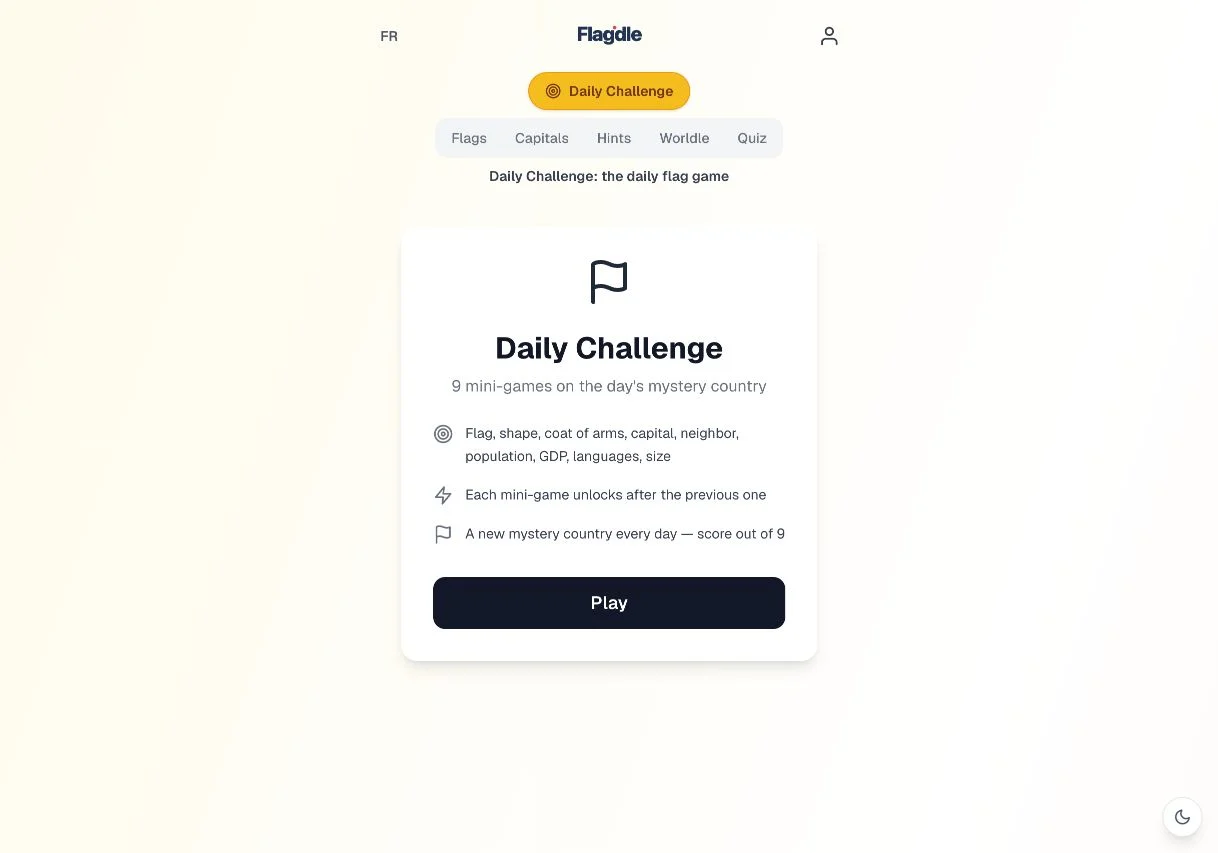
Begin with hidden flag tiles, then explore a daily suite of related country-identification games.
 Free entry
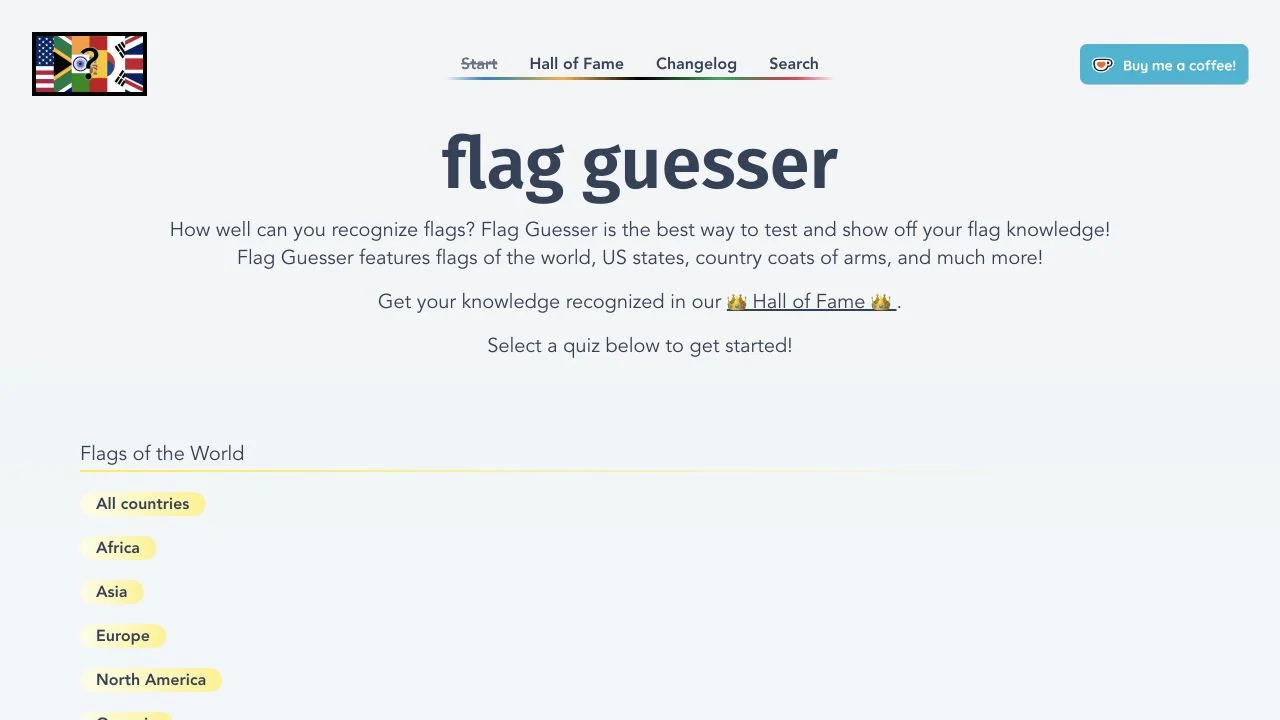
Choose flag quizzes for countries, US states and smaller regional divisions.