 Free entry
Flagle
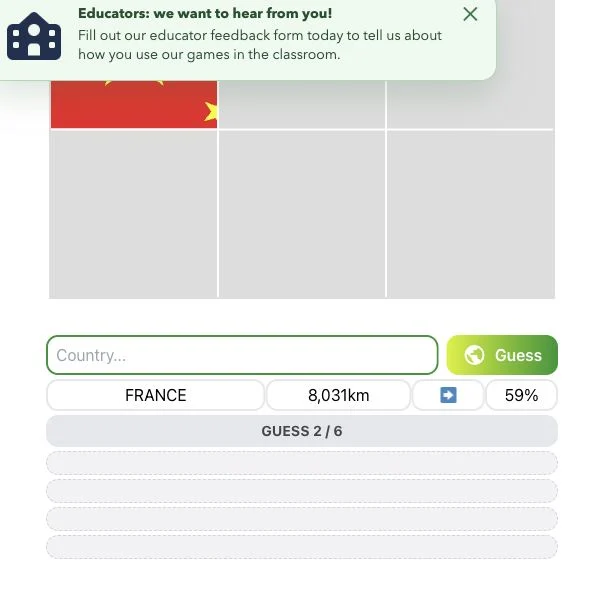
Guess the country as more of its flag is revealed.
Flags
The daily entry leads to several kinds of country evidence. Start with the selected mode’s rules before borrowing a strategy from another flag game.
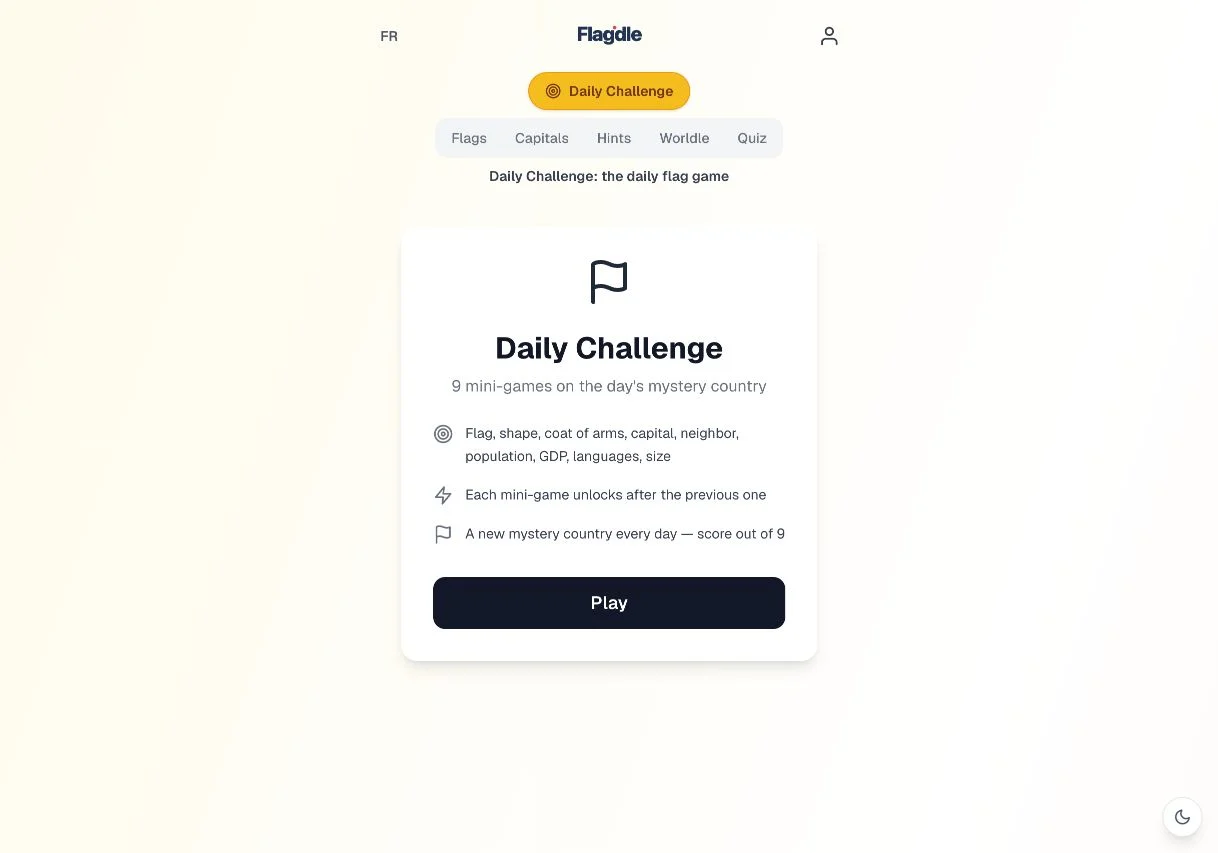
Flagdle’s public introduction offers a daily challenge built around a mystery country. Its flag task hides the flag behind nine tiles and describes three attempts. The site also links tasks involving shapes, coats of arms, capitals, neighbors, population, GDP, languages and area.
That linked set gives the game a broader scope than a single flag reveal. Each attribute asks for a different kind of recognition, so treat the selected mode’s instructions as the rulebook. The screenshot records the public daily entry rather than a completed sequence across all of its modes.
A flag tile can identify a color arrangement while leaving its emblem hidden. Attribute-based tasks restore a different kind of context: a capital or neighbor may settle a country that a partial flag cannot. Move between clues deliberately instead of assuming every linked mode scores or reveals information in the same way.
A plain color tile fits many flags. Use the location of bands or an emblem fragment before committing to a familiar candidate.
The flag introduction gives a short three-attempt budget. A guess used only to test a weak impression can be expensive.
A population clue and a neighboring-country clue have different precision. Use the strongest geographic evidence rather than treating all attributes as equally decisive.
You want a daily country mystery with several linked forms of evidence rather than one isolated flag question.
You want a rapid quiz with a fixed answer list. The multi-mode structure requires checking which task and attempt limit you have selected.
Choose a different game based on the experience you want.
No. The inspected Flagdle flag introduction describes nine hidden tiles and three attempts; similarly named games have separate rules.
The public links include country shapes, coats of arms, capitals, neighbors and several statistical or language attributes.
Free entry
Guess the country as more of its flag is revealed.
 Free entry
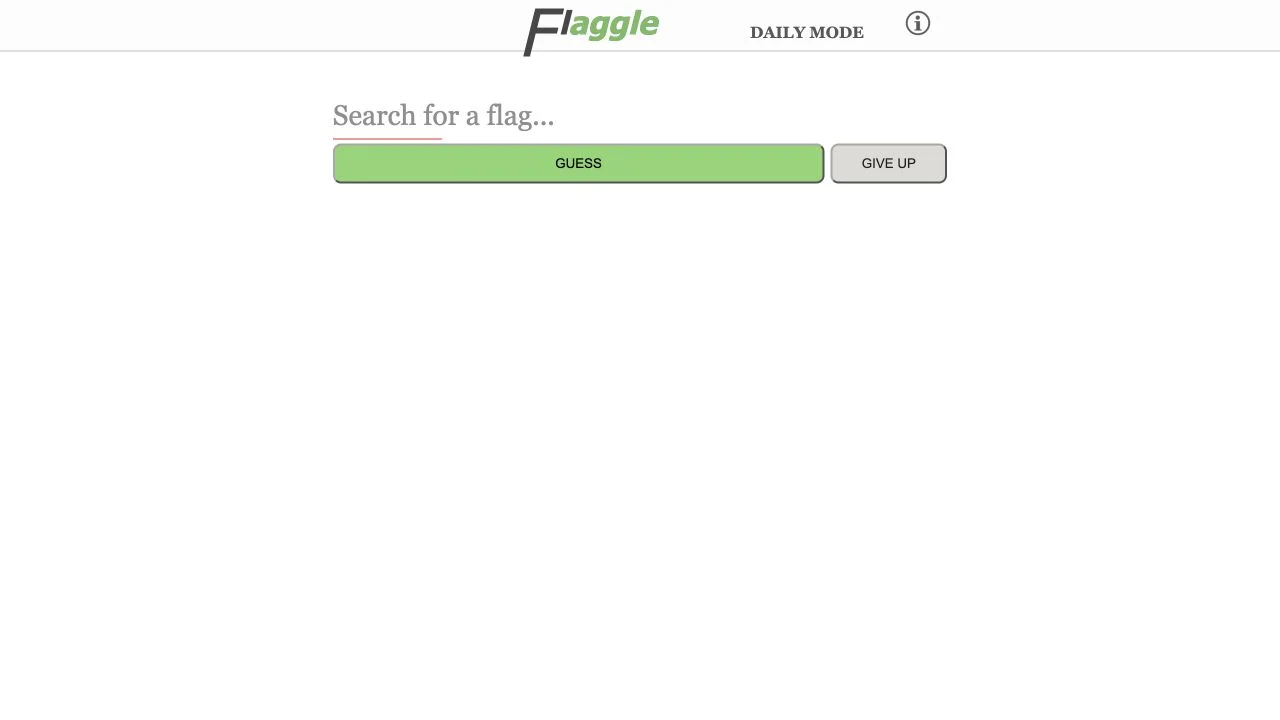
Compare a guessed flag with the target through a mask showing where their colors match.
 Free entry
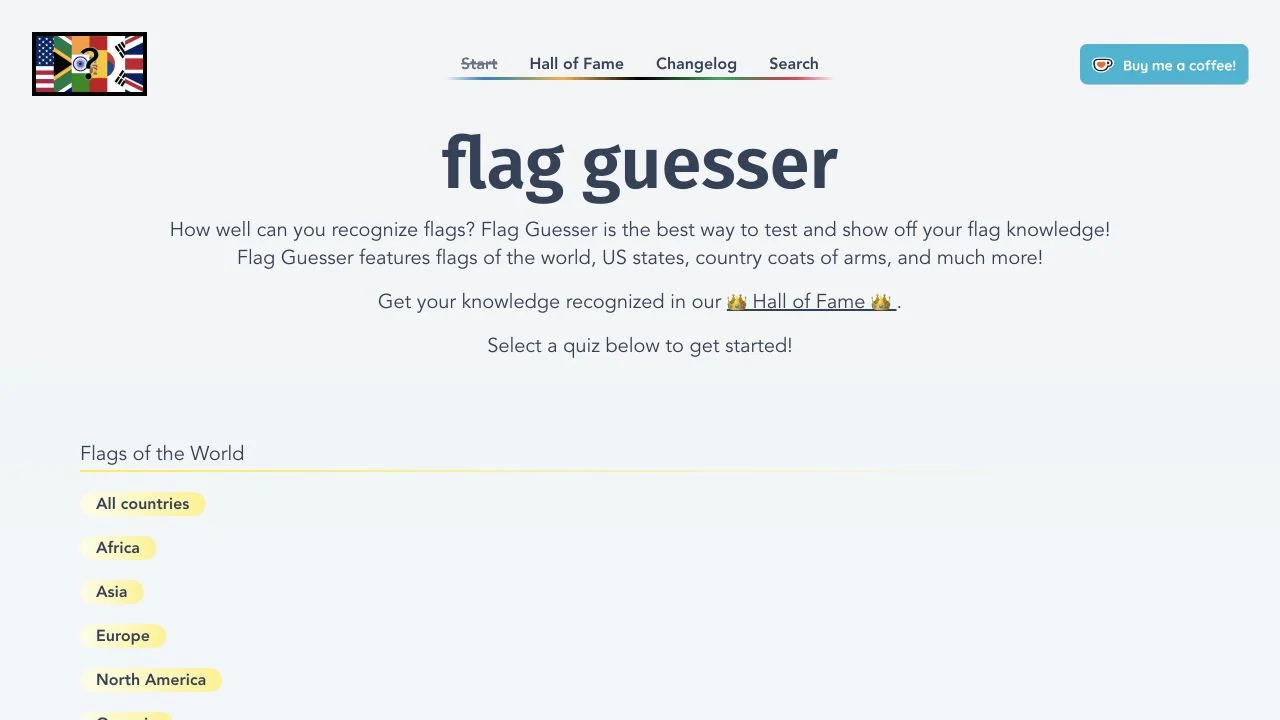
Choose flag quizzes for countries, US states and smaller regional divisions.