 Free entry
Flagle
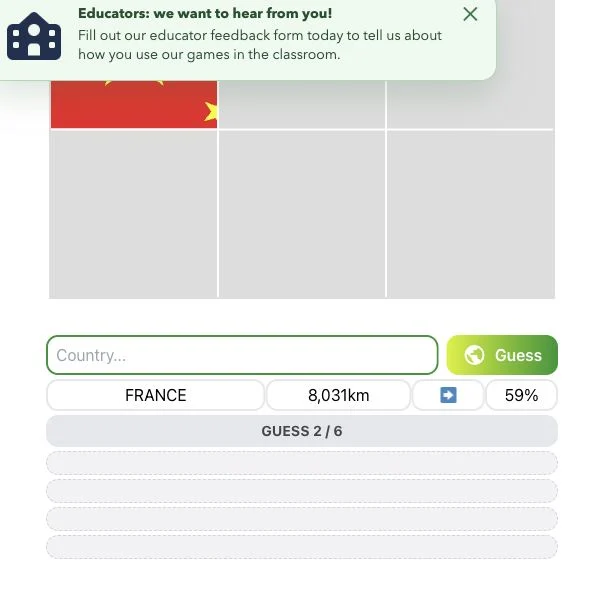
Guess the country as more of its flag is revealed.
Flags
A wrong flag can still be a good experiment. Read which parts match, which parts do not and what that says about the hidden layout.
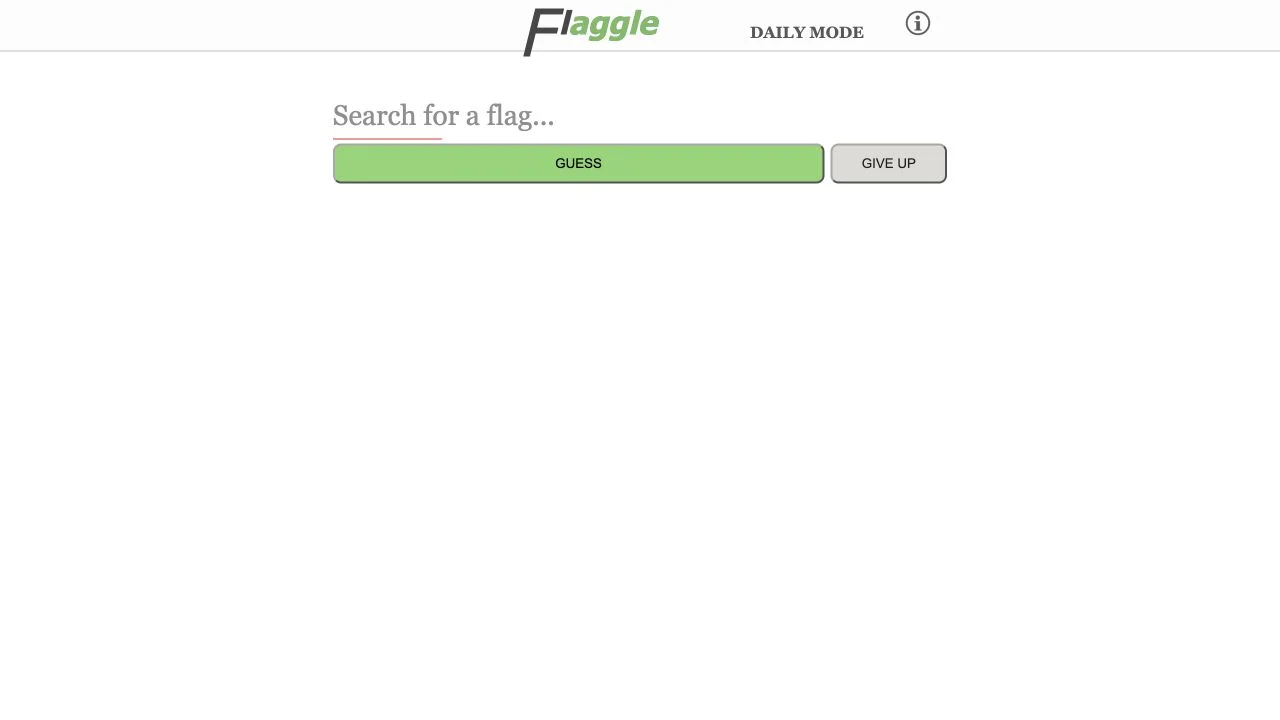
Flaggle uses an overlap mask rather than simply revealing an extra tile after every wrong answer. The instructions explain that green marks matching color positions between your guessed flag and the target. Shapes and stripe placement therefore matter alongside the color palette.
The publisher uses a reduced ten-color palette, which makes flags comparable without requiring an exact digital shade match. Public daily and free-play choices are visible. Countries and territories can appear, so read the answer list rather than limiting your shortlist to the most familiar national flags.
An informative guess does more than name a plausible country. It tests a layout: horizontal bands, vertical bands, a canton or a central symbol. A large matching region supports a pattern hypothesis, while isolated matches may come from colors shared by many unrelated flags.
Compare horizontal and vertical layouts before narrowing to a particular tricolor. The placement of matching patches can separate two flags with the same colors.
A part of your guessed flag that fails to match is evidence too. Use it to reject a layout instead of focusing only on green patches.
Small territories and unusual flags may be valid answers. Consult the selector when a distinctive layout does not fit the usual country shortlist.
You enjoy solving a visual comparison puzzle and want feedback that depends on the flag you choose.
You want a straightforward flag-identification quiz. The overlap mask has its own logic and takes a moment to learn.
Choose a different game based on the experience you want.
The instructions use green to mark positions where the guessed flag and target have matching colors under the game’s palette.
Flaggle reduces colors to a ten-color palette. Pattern and relative position are more useful than judging a tiny shade difference.
Free entry
Guess the country as more of its flag is revealed.
 Free entry
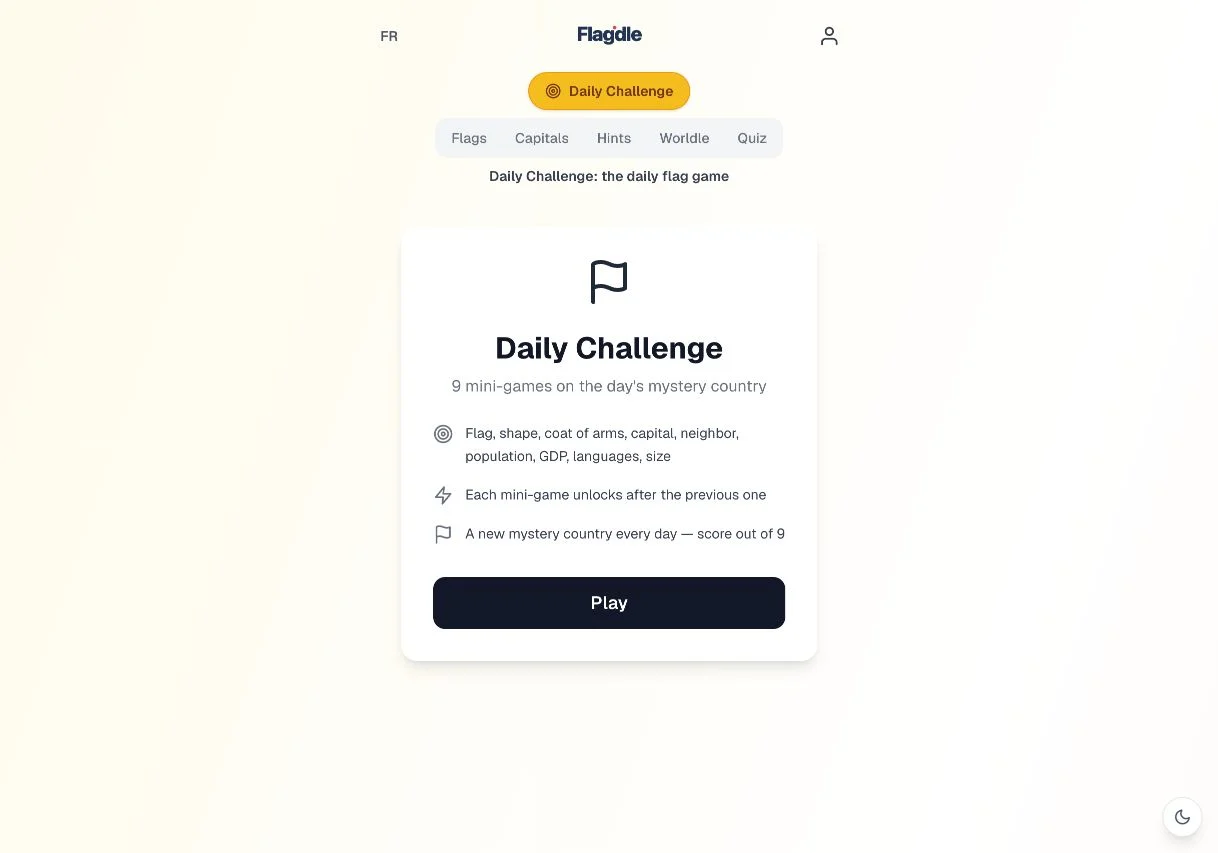
Begin with hidden flag tiles, then explore a daily suite of related country-identification games.
 Free entry
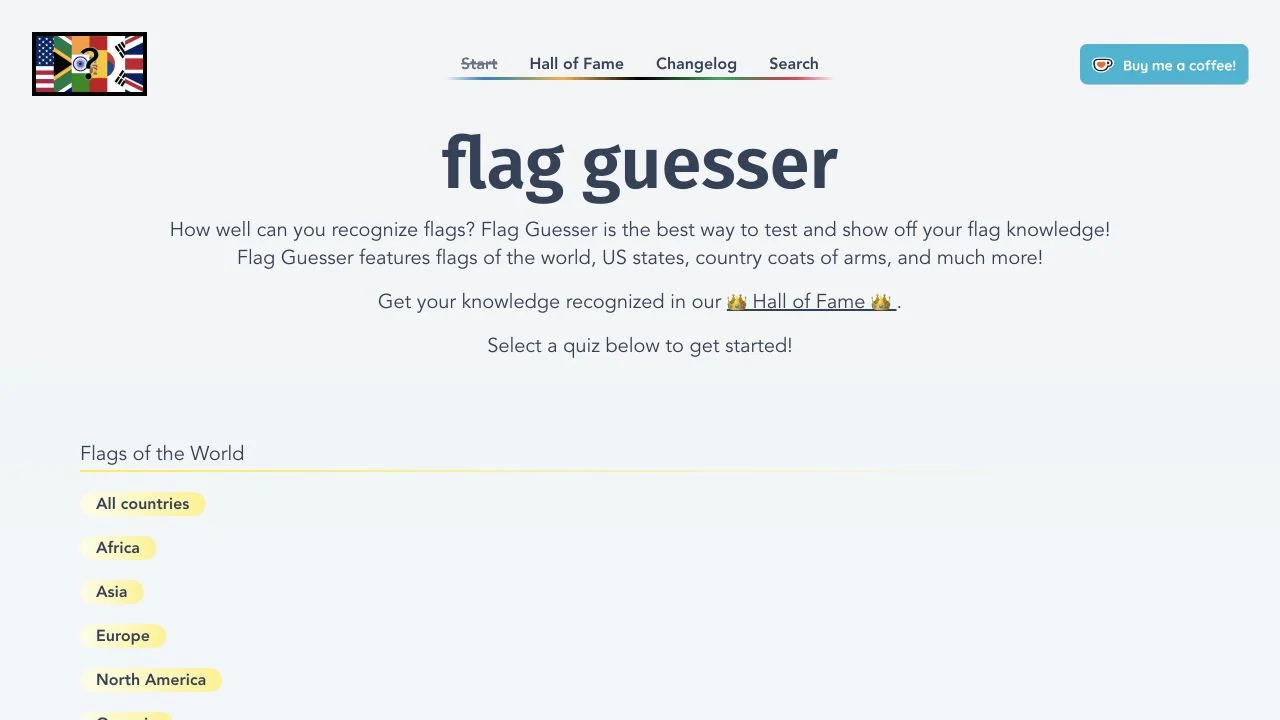
Choose flag quizzes for countries, US states and smaller regional divisions.