 Free entry
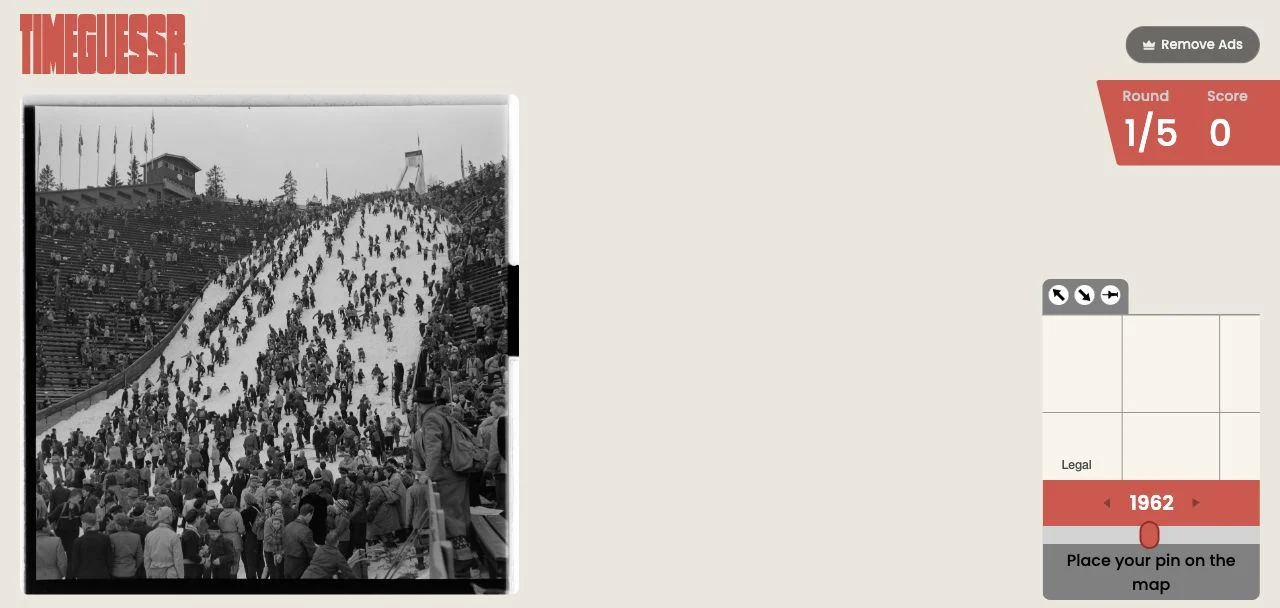
TimeGuessr
Estimate both the location and the year of a historical photograph.
Photos & history
Inspect the current image before showing the map. The next round is another destination, so keep the observation method and rebuild the geographic hypothesis.
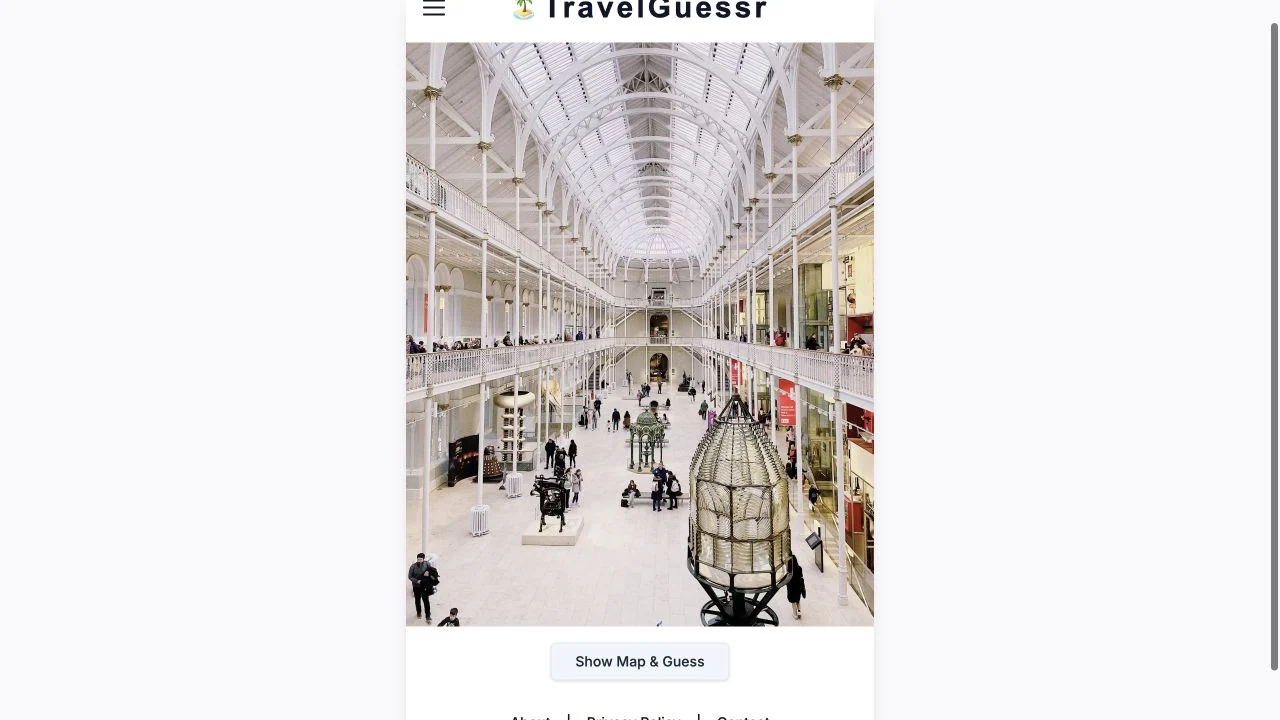
TravelGuessr’s public introduction offers four new locations each day. The inspected round presents one large travel photograph and a Show Map & Guess control. You inspect that image, then place a location answer before continuing to another destination.
This is still-photo deduction rather than a movable panorama or a set of four views of the same place. Image enlargement helps read architectural and landscape clues. The current entry describes a daily set, despite the older supplied catalog classifying it as unlimited.
Each photograph has to support its own location estimate. A recognizable monument can identify a city, while landscape and street design help when there is no landmark. Carry your observation method into the next round, without assuming the next image belongs to the previous region.
Compare building structure, coastline and visible script. A specific geographic clue is stronger than a general impression of a tourist destination.
Enlarge signs or structures that could separate similar places. Decorative details with no geographic meaning rarely improve the map estimate.
The daily set moves between locations. Do not let the previous destination bias how you interpret the next photograph.
You want a short daily travel-photo routine with several separate destinations to locate.
You want unlimited panorama movement or several images of one destination. The inspected format uses separate daily photo locations.
Choose a different game based on the experience you want.
No. The public introduction offers four new locations each day, and the inspected round shows one large photograph for its current location.
The inspected TravelGuessr interface asks for a location on the map, without a year control.
Free entry
Estimate both the location and the year of a historical photograph.
 Free entry
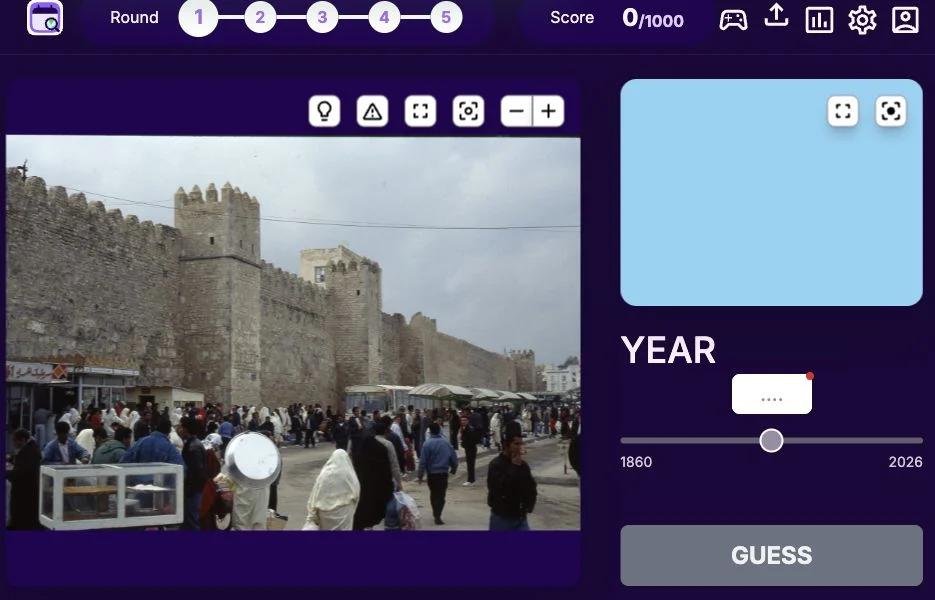
Guess where and when a photograph was taken.
 Free entry
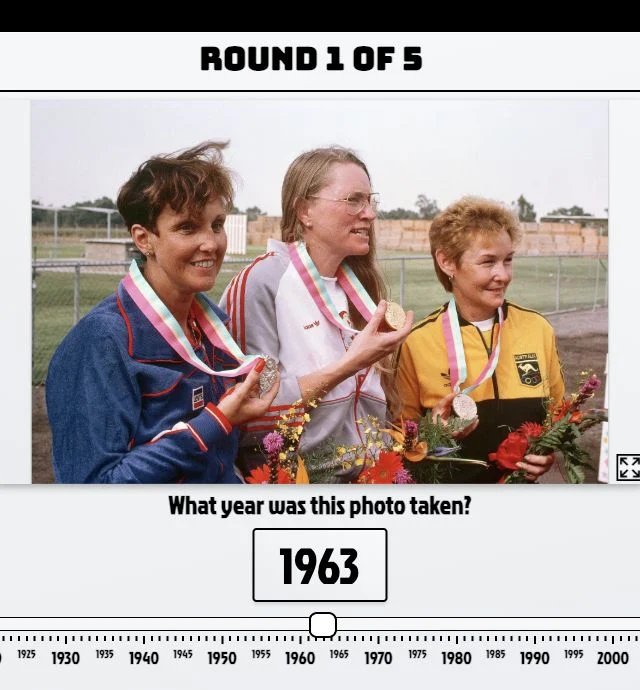
Estimate the year of a photograph from the details within it.