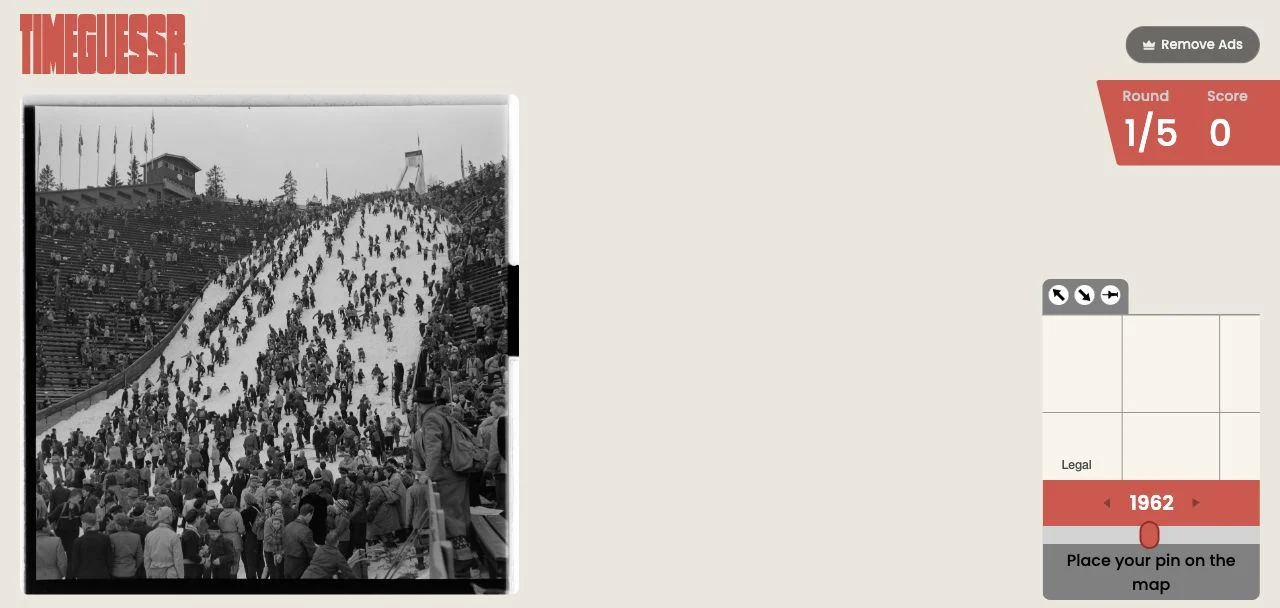
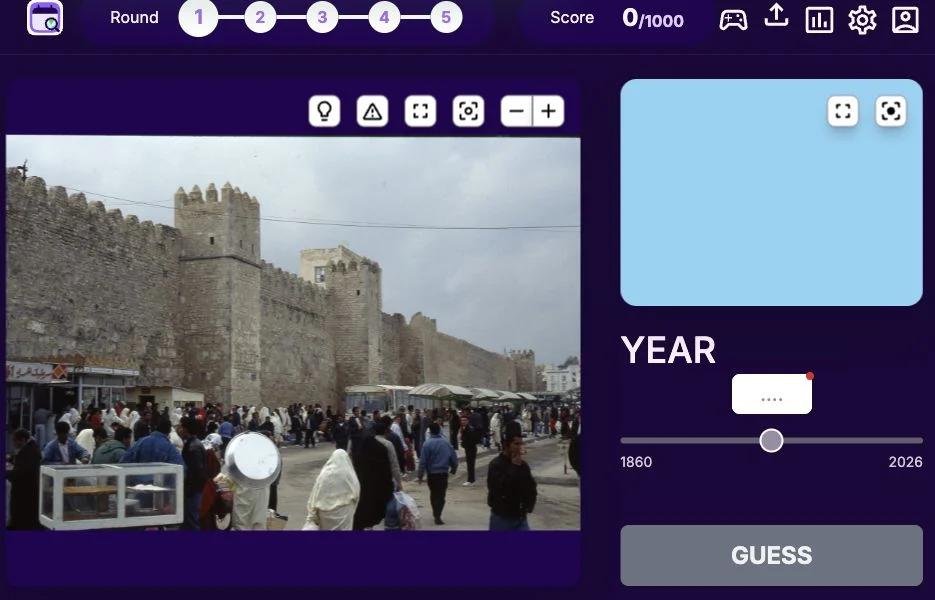
 Free entry
WhenTaken
Guess where and when a photograph was taken.
Photos & history
The same photograph tells two stories: a geographic setting and a moment in history. Split those clues before choosing a map point and year, then use the reveal to diagnose the weaker estimate.
TimeGuessr asks two questions about the same photograph: where was it taken, and when? The two estimates support each other. A road sign can locate the scene, while vehicles, clothing or the built environment can help narrow its era.
Take a moment to separate location evidence from date evidence before moving the map or year selector. This makes the revealed answer useful even when one half of your estimate is far off. It is a good daily choice for players who like looking closely at an image.
Location and year are two separate estimates drawn from the same photograph. A detail can help one estimate much more than the other: a place name may locate the image while revealing little about its date, and a vehicle design may suggest an era without identifying a country. A strong approach keeps those evidence streams separate, then checks whether the proposed place and time make sense together.
TimeGuessr’s creator pairs 5 photos with a year and a location for each. Choose a photo challenge if you enjoy using architecture, clothing and historical context as clues.
Source: TimeGuessr — create your own game (opens in a new tab) ↗ · Checked
Identify location clues such as signs and architecture, then date clues such as vehicles or clothing. This reduces the temptation to let one striking detail decide both guesses.
An old vehicle or building can remain in use for decades. Use several details to estimate an era instead of treating the oldest-looking object as the photograph’s date.
After the answer, decide whether location or year caused the bigger miss. Revisit the visible clue you overlooked so the reveal becomes a lesson in observation.
You enjoy historical photographs and want to investigate more than a country outline. It gives visual detail a purpose, with a geographic question and a historical question in every image.
You prefer moving around a scene or want a single kind of answer. A photograph fixes your viewpoint, and knowing the location does not automatically solve the date.
Choose a different game based on the experience you want.
Choose Virtual Vacation’s City Guesser when you want location clues from moving footage without a year estimate. Signs and street life unfold over time instead of being fixed in one photograph.
Choose Chronophoto if the year estimate is your favorite part. Removing the map lets you concentrate on historical visual clues rather than splitting attention between two tasks.
No. Color treatment alone is weak evidence. Compare the transport, clothing, signs and built environment before using the image’s appearance to estimate an era.
Keep the location estimate and reason about the date independently. Look for several era clues; uncertainty about one answer need not erase good evidence for the other.
Free entry
Guess where and when a photograph was taken.
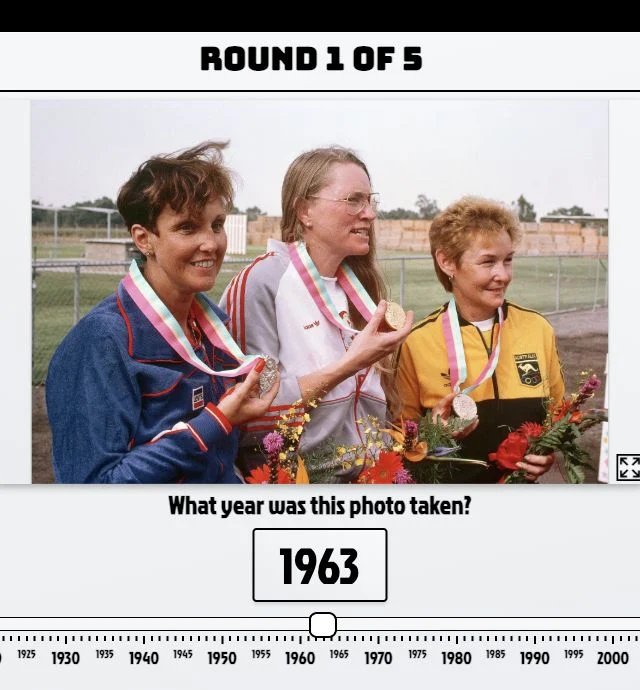 Free entry
Estimate the year of a photograph from the details within it.
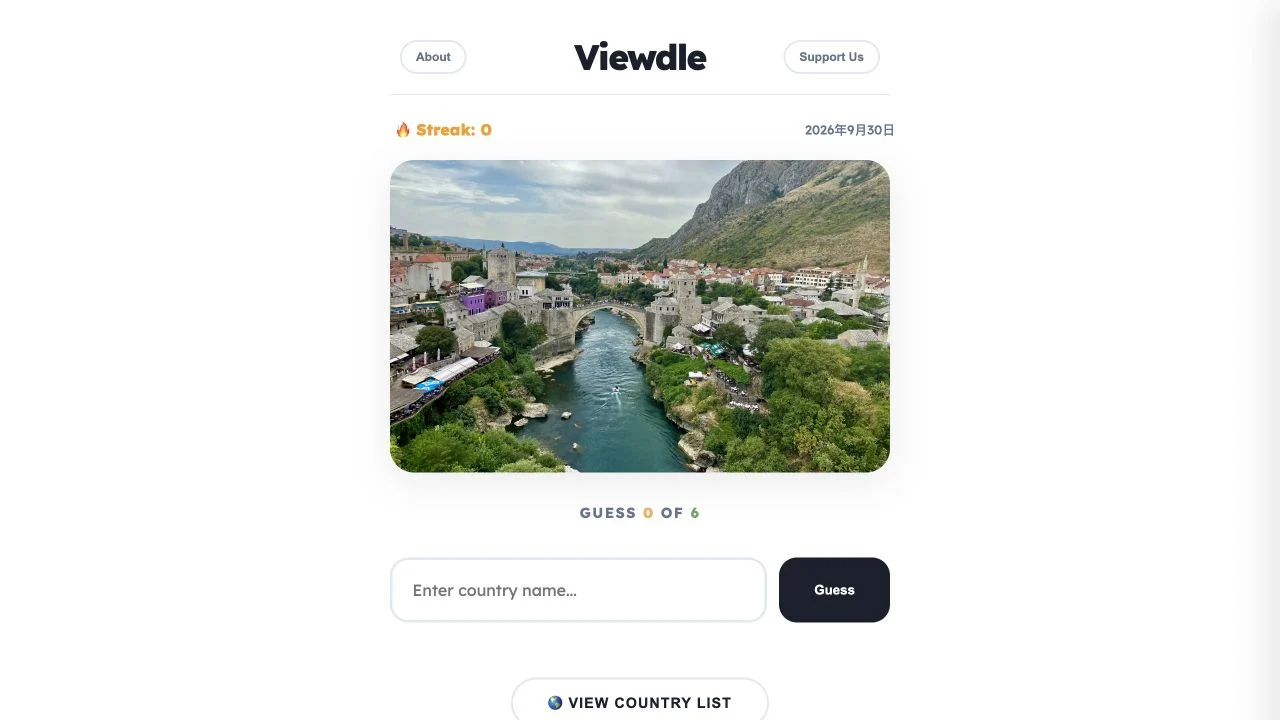 Free entry
Identify a daily photograph’s country in six guesses, using geographic feedback after each attempt.