 Free entry
Reborder
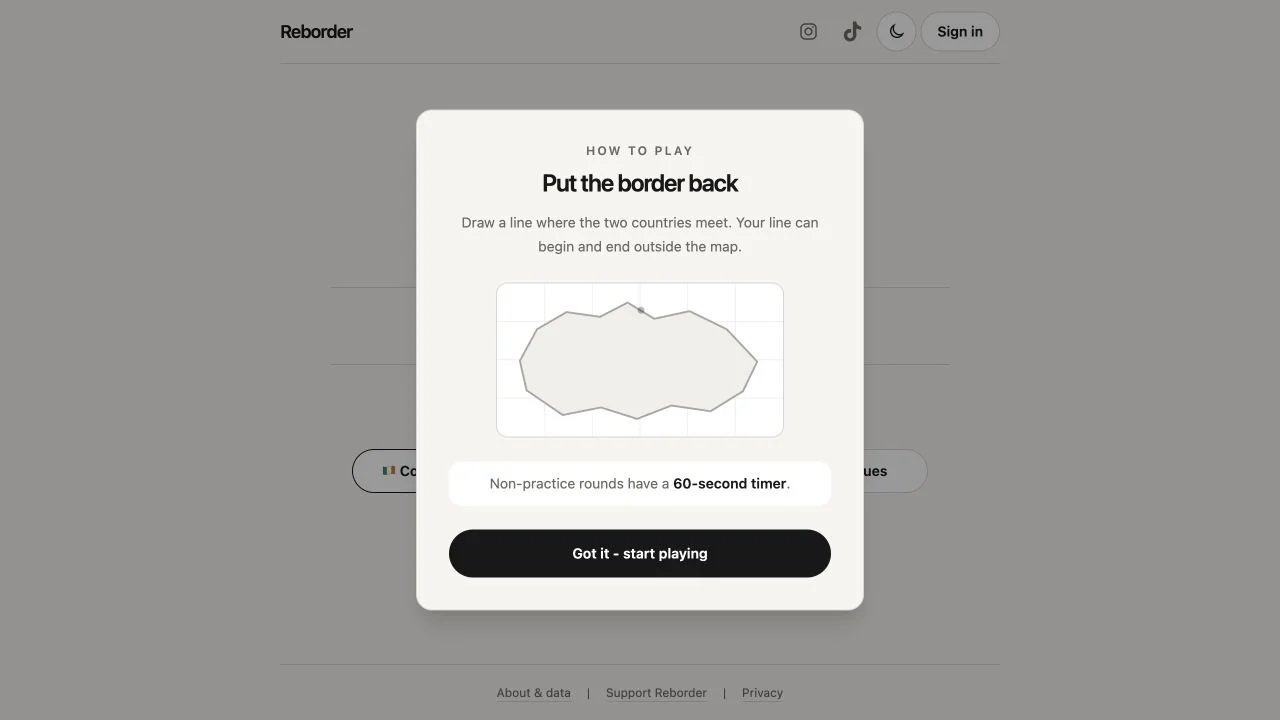
Redraw the missing shared border between two countries, with timed daily rounds and practice options.
Drawing
Knowing the country is easier than recalling every turn in its outline. Establish the proportions, choose useful anchors and let the overlap reveal the features you missed.
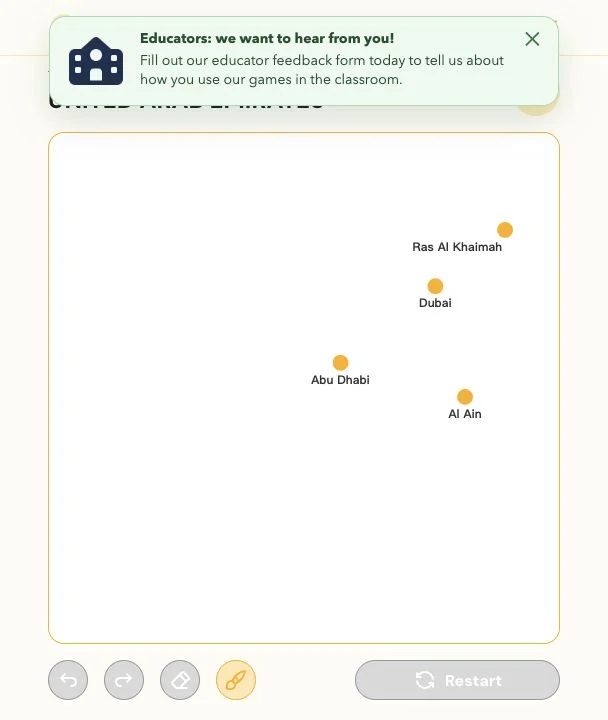
Mapster reverses the familiar country-outline puzzle: it names a country and asks you to draw its boundary. The checked canvas included reference cities, undo and redo tools, an eraser, restart and two hint types. The official instructions describe one country per day and support a finger on mobile or a mouse on desktop.
Scoring compares the area you drew with the real country, rewarding overlap while accounting for extra space. The score reaches 1,000 points. You can reveal border pieces or briefly view the full outline, but those aids change the memory task. A rough drawing followed by an informative comparison is a better learning goal than assuming recognition of the name guarantees accurate proportions.
Drawing makes you retrieve the shape’s proportions and turns, not choose among familiar-looking silhouettes. Mapster turns the strokes into a shape, automatically closing an open boundary when calculating the result. Area overlap determines the score, so an oversized approximation can lose accuracy through excess space even when its general direction looks correct. The city references and border hints provide anchors for the next attempt.
Decide the country’s broad width, height and orientation before drawing small coastal details. A detailed border on a wrongly proportioned shape will still overlap poorly.
Reveal a border piece when you are unsure about a particular side. Briefly showing the whole shape is more useful when the overall proportions, rather than one bend, are missing.
After submission, compare the parts outside the real country with the omitted sections. That shows which feature to remember, instead of reducing the drawing to a single score.
You recognize country names and shapes but want to test whether you can reproduce their borders yourself.
You want unlimited target selection or a simple name-answer puzzle. The daily country is fixed, and drawing is easier with a comfortable pointer or touchscreen.
Choose a different game based on the experience you want.
The official rules compare the drawing’s area with the real shape, considering overlap and extra area, with a maximum of 1,000 points. An unclosed shape is closed automatically for scoring.
Yes. The rules allow three border-piece reveals and three full-shape glimpses. The full-shape duration shortens from five to four to three seconds; note which help you used when comparing practice sessions.
Free entry
Redraw the missing shared border between two countries, with timed daily rounds and practice options.
 Free entry
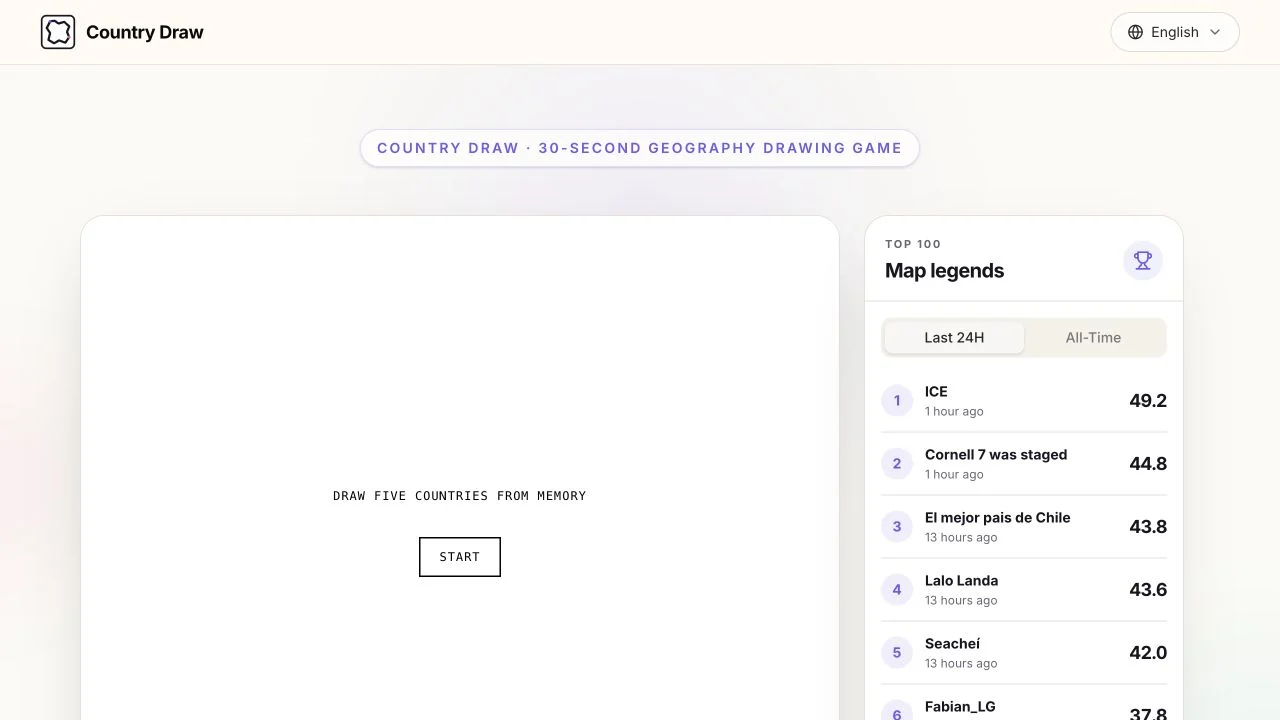
Sketch five countries from memory, with 30 seconds for each and normalized outline feedback after the set.
 Free entry
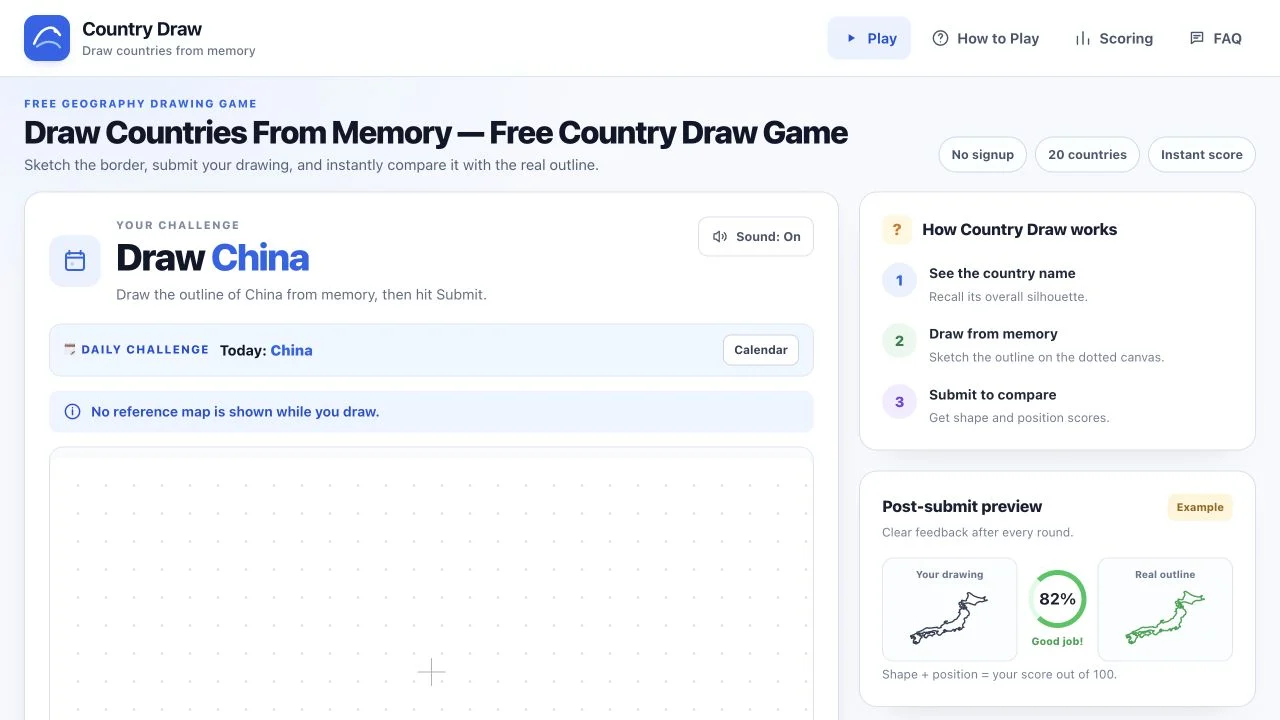
Draw an untimed country outline on a dotted canvas and inspect separate shape and position scores.