 Free entry
Countryle
Narrow down a hidden country through geographic and demographic clues.
Daily puzzles
The outline is just the beginning. Six guesses, direction arrows and center-to-center distances turn shape recognition into geographic deduction, with a new opportunity to learn from each revealed country.
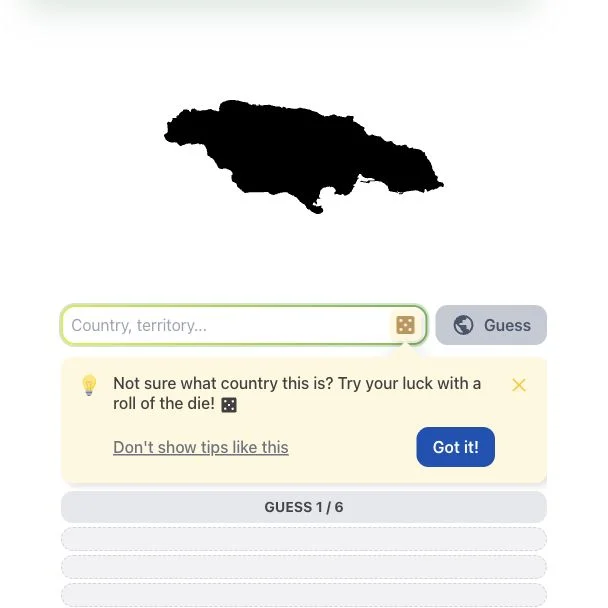
Worldle gives you a country or territory outline without the surrounding map. A guess returns a direction arrow, distance and proximity indicator, turning an unfamiliar silhouette into a problem you can work through instead of a pure memory test.
The daily puzzle is free. The official archive and some additional features require a Teuteuf account and paid membership. It is the Teuteuf game linked here; similarly named Worldle sites are separate products.
A silhouette removes the surrounding countries that usually help you recognize a place. Your guesses restore some of that context through distance and direction. The useful question changes after each attempt: first, which outlines seem plausible; then, which candidates fit the geographic feedback as well? A close guess can still be wrong because the displayed distance is between country centers, rather than their nearest borders.
Worldle gives you 6 attempts, with distance, direction and proximity feedback after each guess. Choose a silhouette puzzle if you enjoy recognizing shapes and narrowing down nearby countries.
“Each guess must be a valid country or territory.”
Source: Worldle — official rules (opens in a new tab) ↗ · Checked
Look for a long coast, a narrow neck, detached islands or a compact inland shape. Describing the features can keep a familiar but poor match from dominating your guesses.
An eastward arrow alone leaves a huge search area. Combine it with the distance from your previous guess, and remember that sharing a border need not mean a tiny center-to-center distance.
The outline does not tell you the country’s physical size. If your guesses stay in the wrong region, compare both large countries and small territories with similar shapes.
You want a short daily puzzle that mixes visual recognition with deduction. It suits a morning routine because you can make progress from feedback even when the first silhouette is unfamiliar.
Your main goal is to learn where every country sits on a complete map. An outline puzzle exercises shape recognition, but a regional map quiz provides the surrounding context you need for systematic practice.
Choose a different game based on the experience you want.
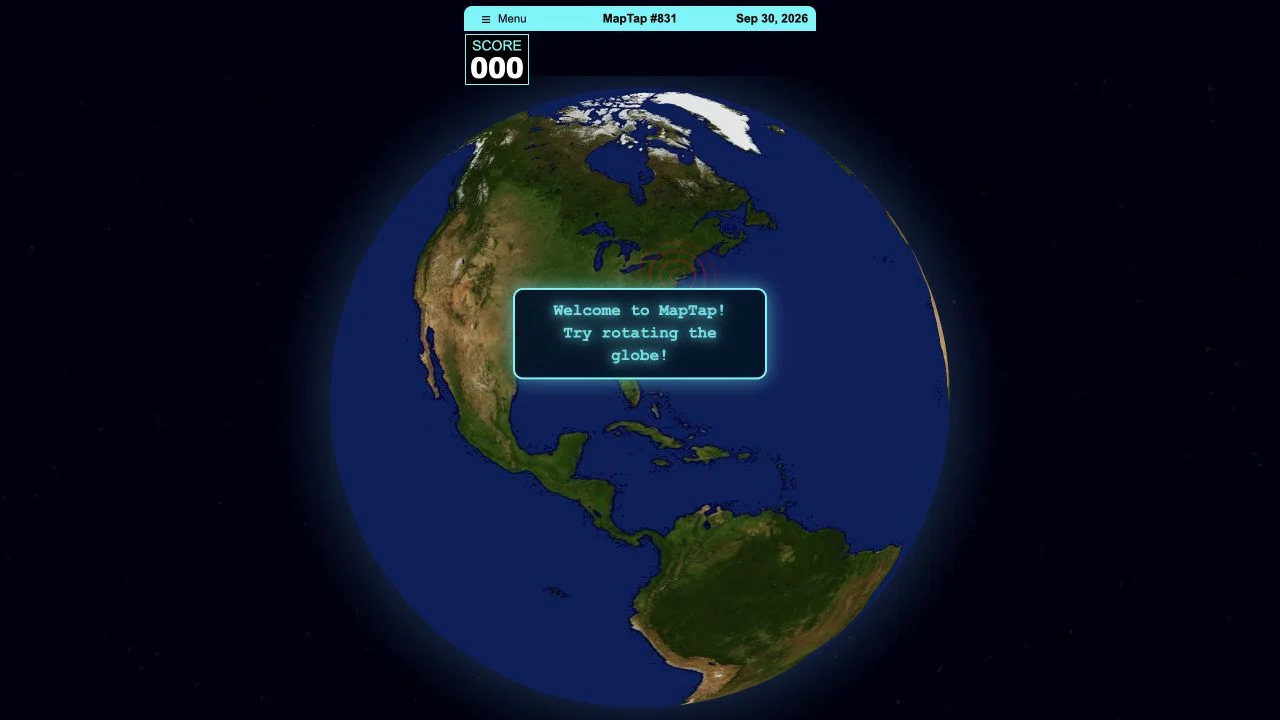
Choose Globle for the same country-guessing habit with an interactive globe and warmer-or-colder clues. It shifts the emphasis from recognizing an outline to understanding relative positions.
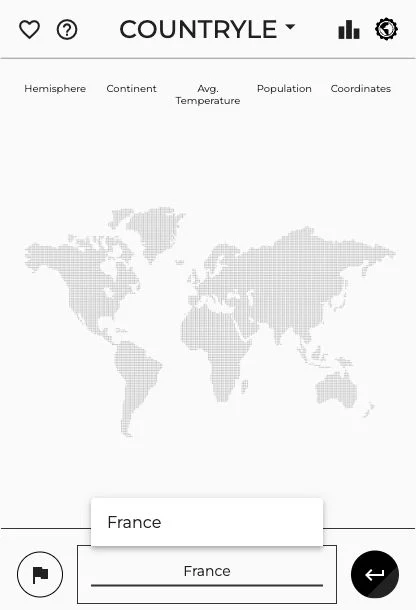
Choose Countryle when you prefer geographic and demographic comparisons to visual shapes. Both are daily deductions, but they ask you to retrieve different kinds of country knowledge.
Worldle measures between country centers. Two countries can share a border while their centers are far apart; the number does not measure the shortest crossing between them.
This listing links to Teuteuf’s silhouette puzzle. Worldle Daily is a separate street-view product in our directory; matching names do not mean matching rules or accounts.