 Free entry
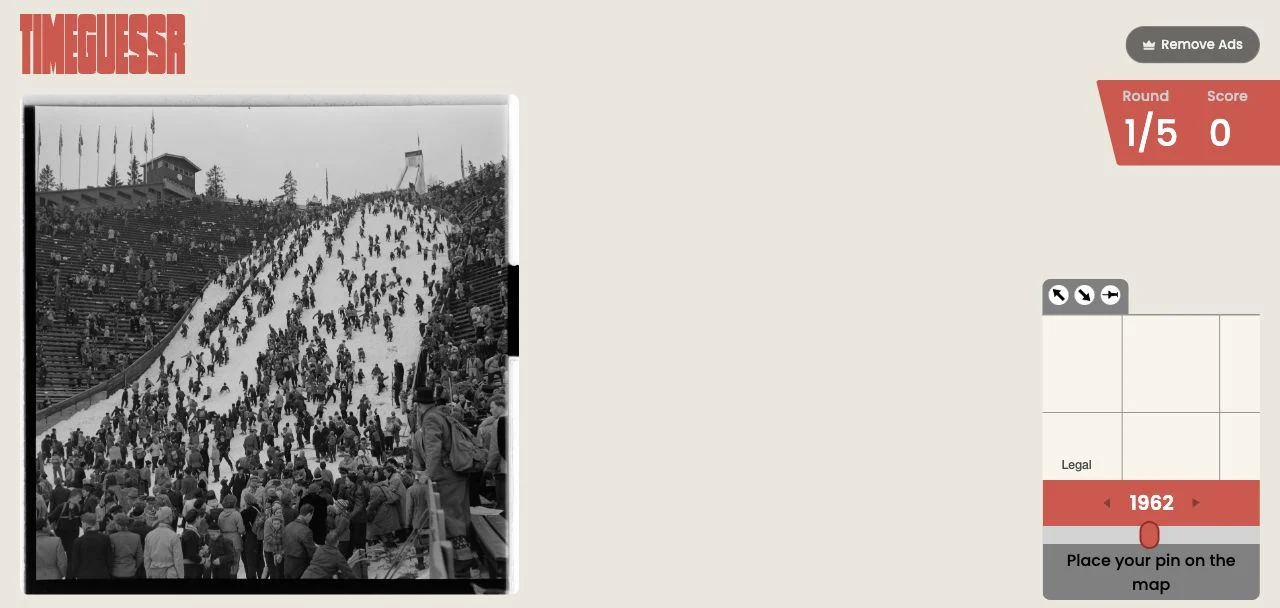
TimeGuessr
Estimate both the location and the year of a historical photograph.
Photos & history
Read what happened, not just who appears in the headline. An event’s stage can separate the correct year from a familiar nearby date.
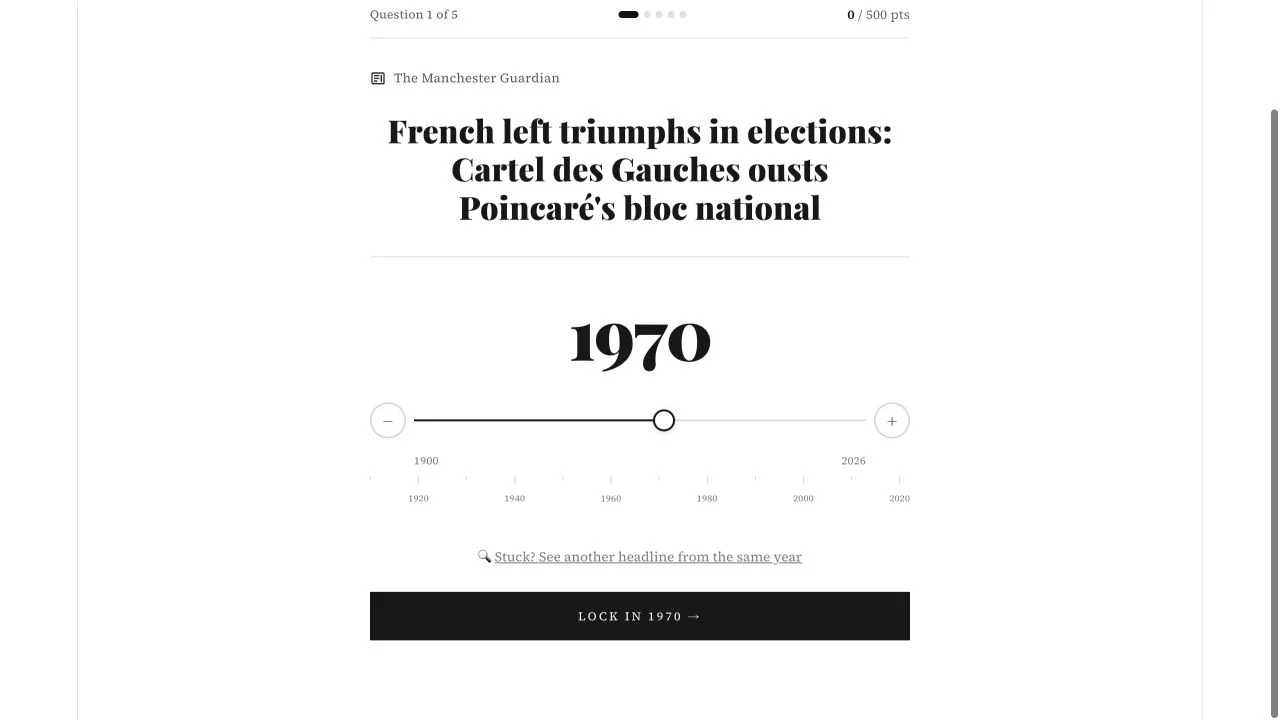
Headlines asks you to place a news headline in time rather than locate a photograph. Its five-question daily set starts each question at a possible 100 points, subtracting two for every year of error. The inspected slider spans 1900 to 2026, giving the task a modern-history focus.
An extra hint supplies another headline from the same year. That can connect a vague story with a better-known event without simply revealing the date. The headline wording is the central evidence: the listed category groups it with history games, but there is no map-pin answer in the inspected question.
A headline describes how an event looked at the time, which may differ from its later textbook name. Identify whether the story concerns an announcement, election, invention or aftermath before using a remembered date. A second headline gives an independent route to the same year.
An announcement and its eventual outcome can occur in different years. Read the tense and specific action rather than dating the general subject.
Political terms, technologies and named leaders can establish a period even when you cannot recall the precise year. Narrow from that interval.
Compare the two headlines as separate events. Their overlapping time window can be more useful than studying one ambiguous story longer.
You enjoy modern-history deduction through news and want year guessing without a photo or map.
You prefer visual geography clues. Headlines relies on written events and chronological recall.
Choose a different game based on the experience you want.
The inspected daily question asks for a year using a slider, without a location-map answer.
It provides another headline from the same year, allowing you to compare two historical clues.
Free entry
Estimate both the location and the year of a historical photograph.
 Free entry
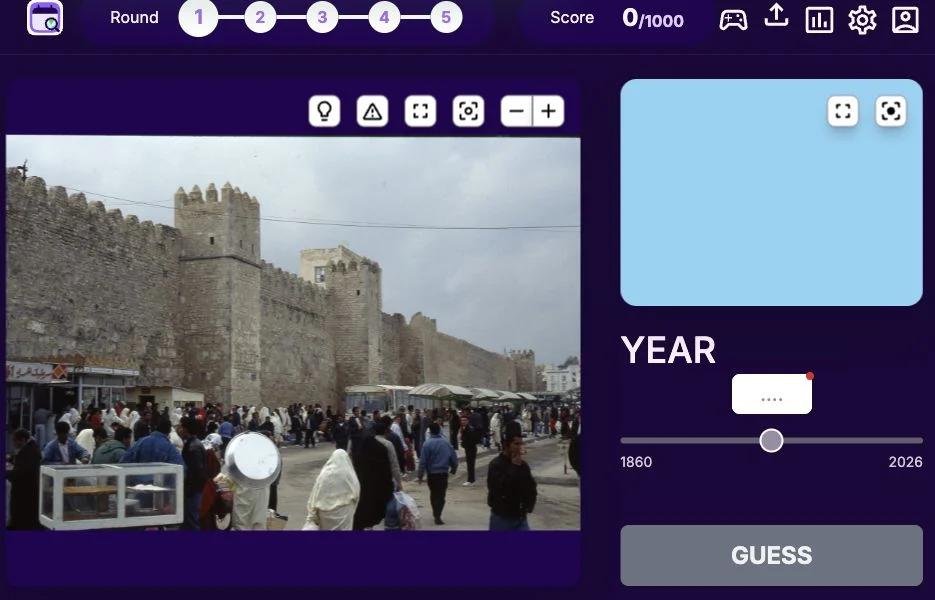
Guess where and when a photograph was taken.
 Free entry
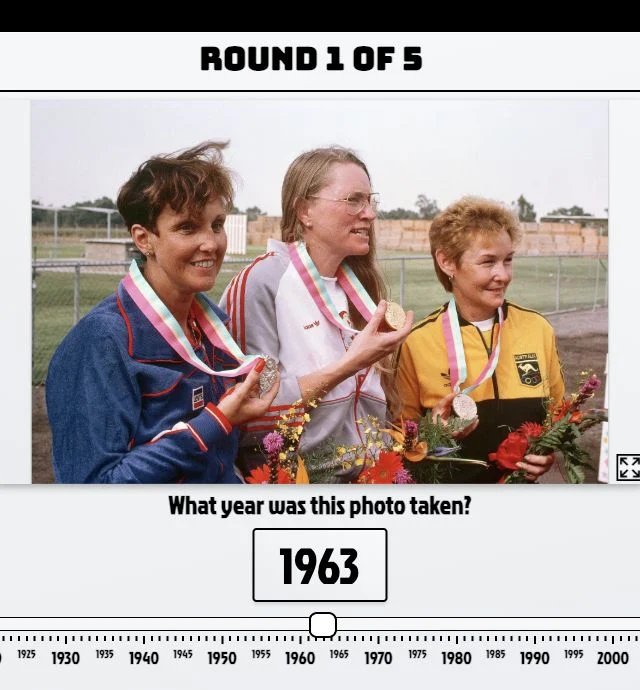
Estimate the year of a photograph from the details within it.