 Free entry
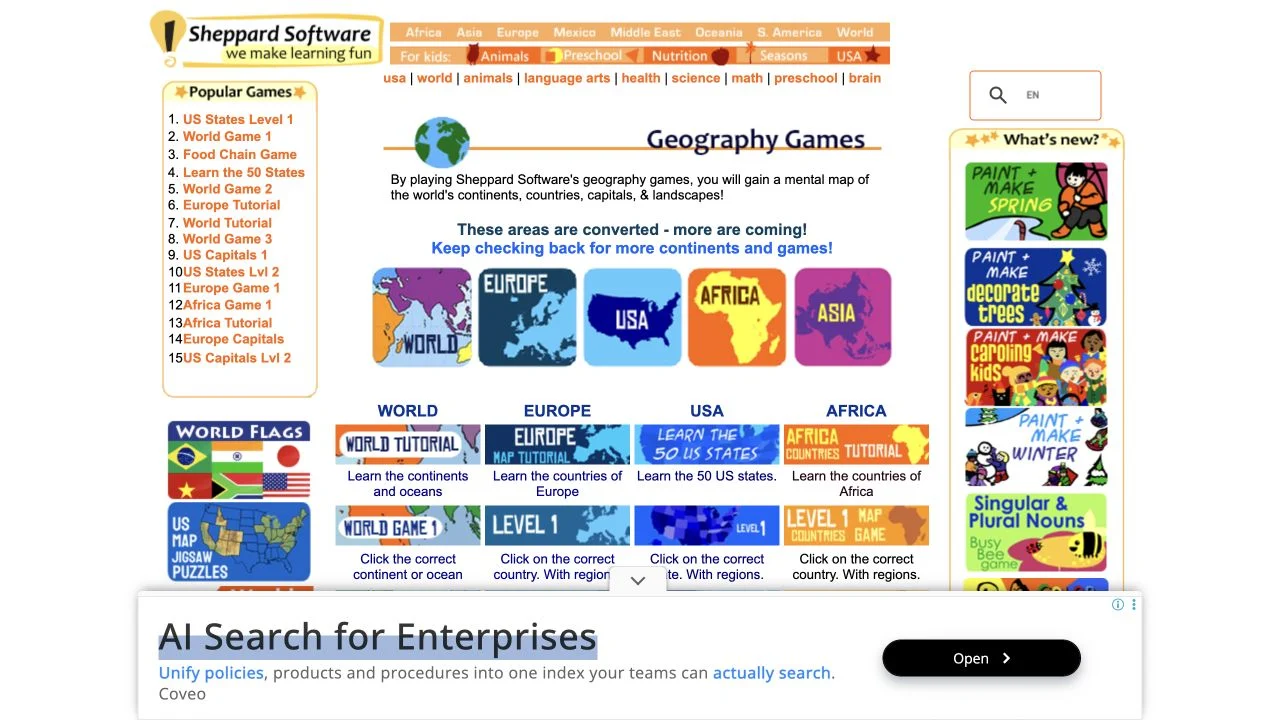
Sheppard Software
Learn geography through regional map exercises and approachable practice games.
Map quizzes
Choose countries, capitals or physical geography, then give yourself a manageable region to learn. Use missed answers to study neighboring places and geographic relationships before repeating the exercise.
World Geography Games organizes exercises by geographic subject and region. That makes it easier to choose a manageable lesson than a random worldwide quiz: you can practice a continent, then return to the same map until the locations become familiar.
The site includes more than country names. Physical features and capital exercises make it useful when you want to connect places with their surroundings. Treat repeated attempts as practice rather than chasing a score before you understand the map.
The subject and region act as the lesson plan. A country exercise practices named locations; a capital or physical-feature exercise asks you to connect a different label with the map. Repeating the same set can build recognition, but the learning becomes more durable when you remember the relationships between places. The catalog is most useful when you choose a specific gap in your knowledge rather than opening the largest quiz immediately.
Practice countries, capitals or a physical feature separately at first. Combining unfamiliar names and unfamiliar positions in the same session makes it harder to diagnose mistakes.
After a wrong selection, identify a neighboring country, coastline or other reference. That gives the place a geographic relationship rather than an arbitrary position on the screen.
Repeat a manageable exercise after a break, then move to a larger set. Immediate recognition during one session is useful, but recalling the map later is a stronger learning check.
You want focused geography practice with a clear subject, especially for self-study or a planned lesson. Regional exercises make it easier to match the activity to what a learner already knows.
You want a shared daily mystery or competitive street-view rounds. This is a learning catalog; repeated work on one map is the point rather than a surprise destination.
Choose a different game based on the experience you want.
Choose Seterra to compare its regional subjects and available pin or typing exercises. Switching answer formats can help distinguish recognizing a position from recalling its name.
Choose Travle to apply your map knowledge to border connections. A daily route puzzle tests how countries join together, rather than asking you to select a prompted location repeatedly.
A smaller region is often easier to learn deliberately. Start where you can connect new countries to familiar ones, then use the world exercise to combine those regional maps.
It helps when you review why an answer was wrong and revisit the map later. Repeating the same clicks immediately can improve a score without building lasting location knowledge.
Free entry
Learn geography through regional map exercises and approachable practice games.
 Free entry
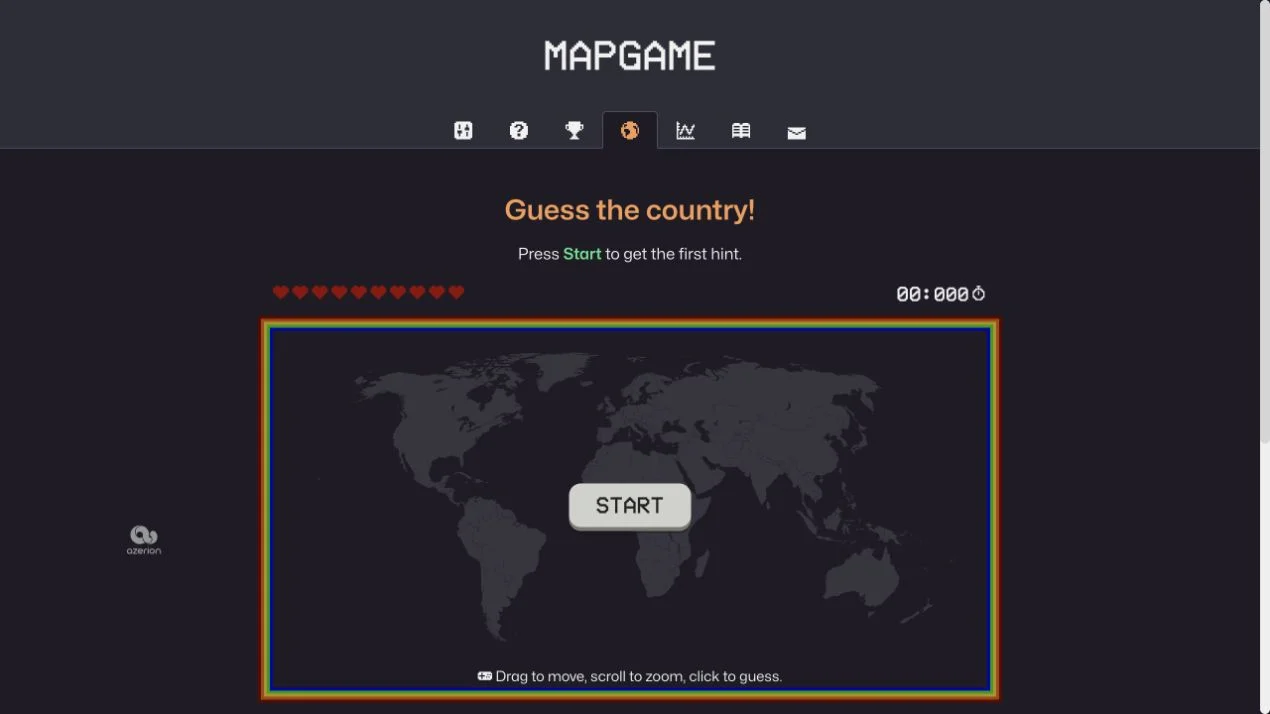
Find a hidden country through clues on an interactive world map.
 Free entry
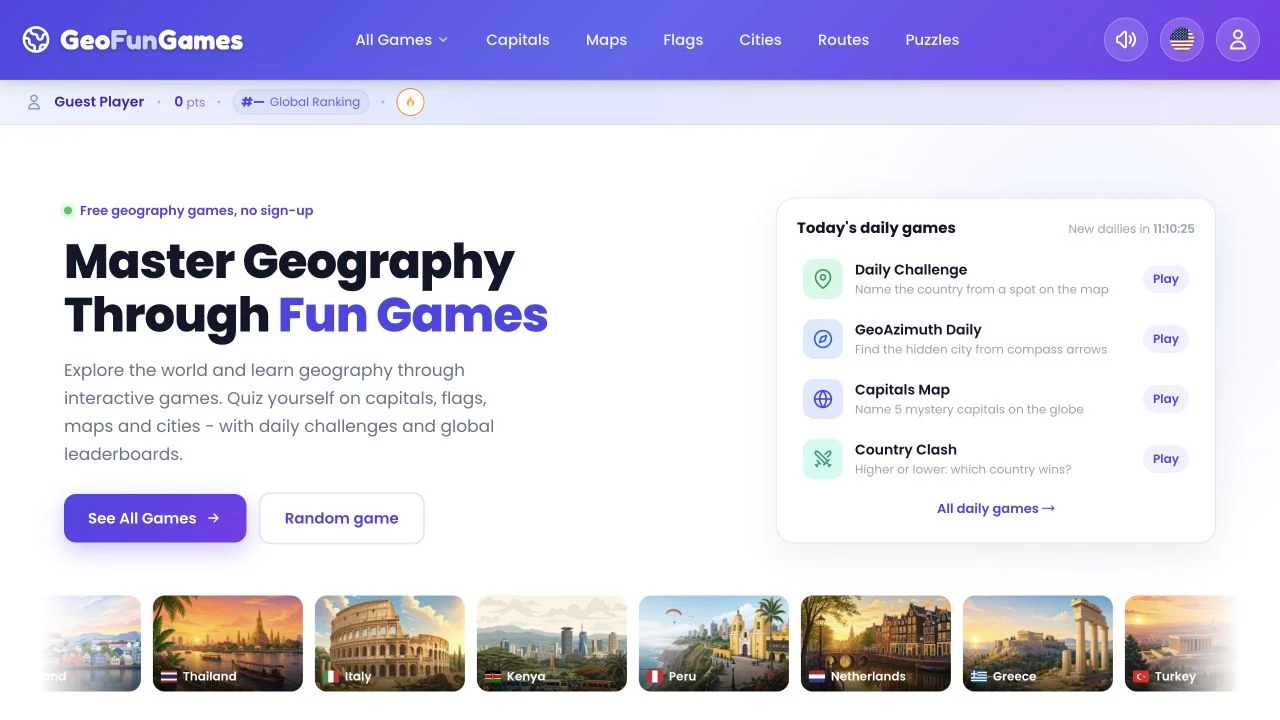
Practice map, flag and capital knowledge across geography activities.