 Free entry
Worldle
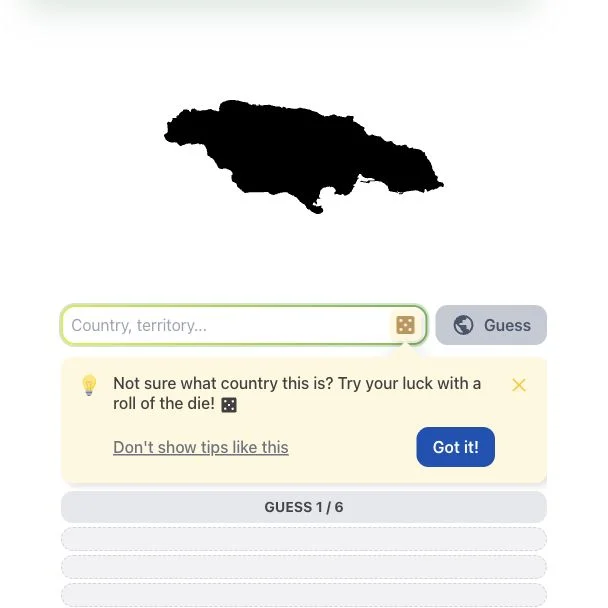
Identify a country or territory from its silhouette, using distance and direction clues.
Daily puzzles
Line membership and geographic position are separate clues. Choose a city, anchor the search at a station you know and combine the comparisons to find its daily target.
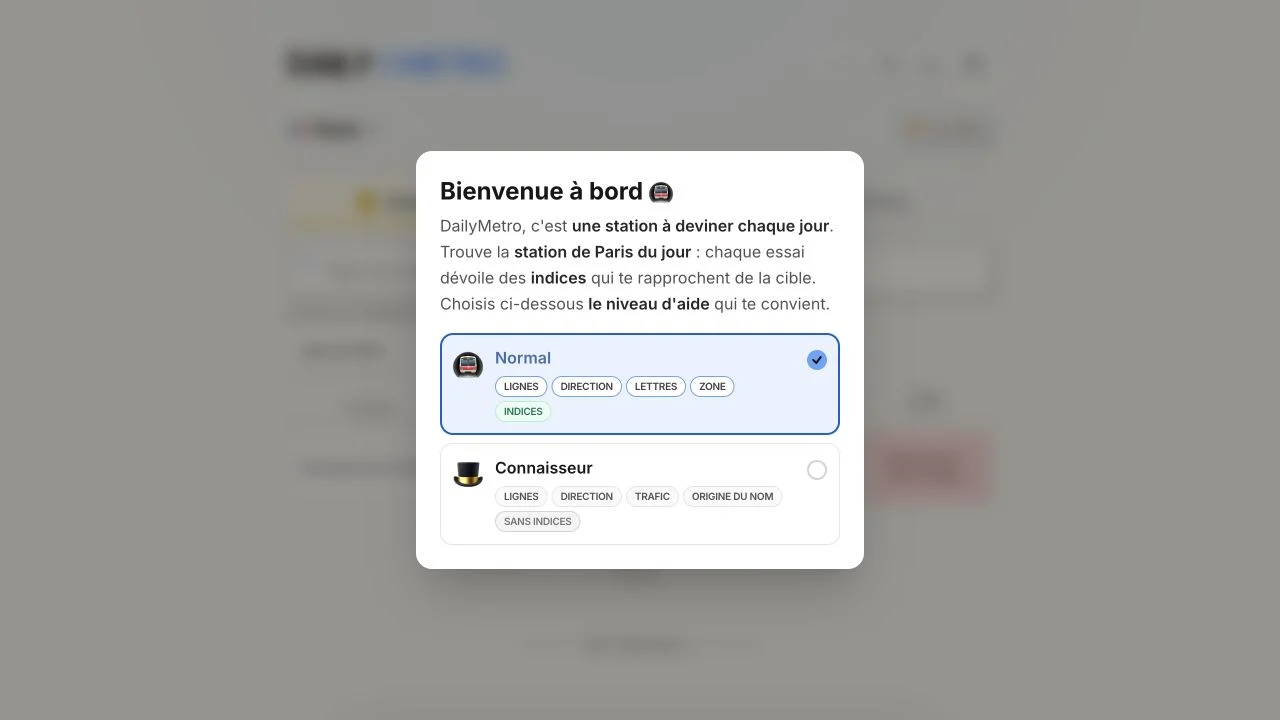
DailyMetro selects a city network and asks for its station of the day. The checked Paris Classic screen compares metro lines, direction toward the target, letters in the name and a neighborhood zone. Green, orange and red feedback distinguish correct, partial and incorrect comparisons.
Classic, Map and Photo tabs change the type of station clue, while a city selector changes the network. The Paris interface was in French during our check. This is more specific than guessing which city owns a subway map: local station knowledge and network relationships drive the answer.
A transit network is both a diagram and a real city. Two stations can share a line while being far apart, and a direction clue refers to the target’s position rather than simply the next stop along that line. Combine network membership with geographic zone and name constraints. Using an interchange as an opening guess may expose several useful relationships, but it does not mean the target must also be an interchange.
Choose a familiar station so its direction and zone feedback have geographic meaning. A famous name without a known position is a weaker anchor.
A shared line is not the same as a nearby location. Check which candidates also fit the direction and neighborhood clues.
Classic tests comparison clues; Map and Photo offer different evidence. Pick the format that matches your network knowledge rather than assuming every tab is the same puzzle.
You enjoy urban transit and want a daily puzzle rooted in a particular city. It can make familiar stations part of a more connected mental map.
You prefer global country trivia or need an entirely English interface. The checked Paris round requires local station names and French labels.
Choose a different game based on the experience you want.
The checked Paris Classic round asks for a station of the day within the chosen city network. The city is selected before you solve.
Not necessarily. A metro line can cover a long route. Combine it with direction, zone and the other displayed comparisons to narrow the station.