 Free entry
LangGuessr
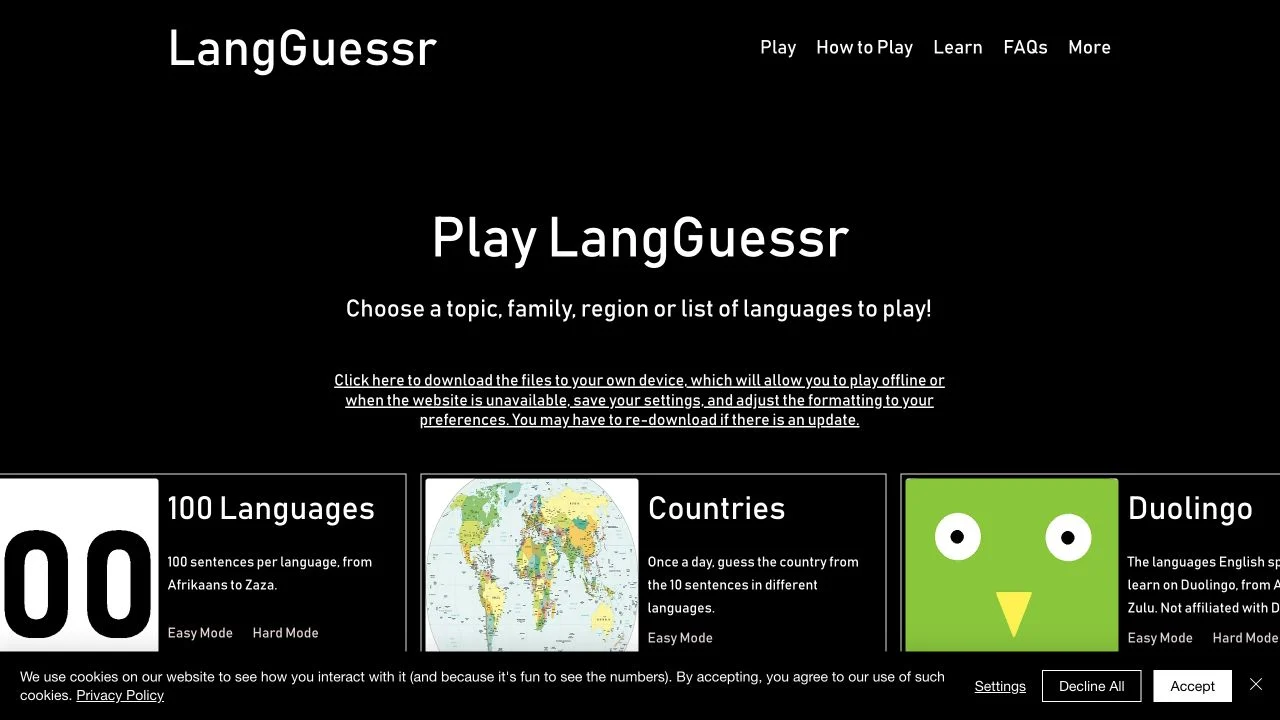
Recognize written languages through sentence packs organized by region and language family.
Languages
A language can travel far beyond its best-known country. Keep the two answers separate while combining speech patterns with progressive hints.
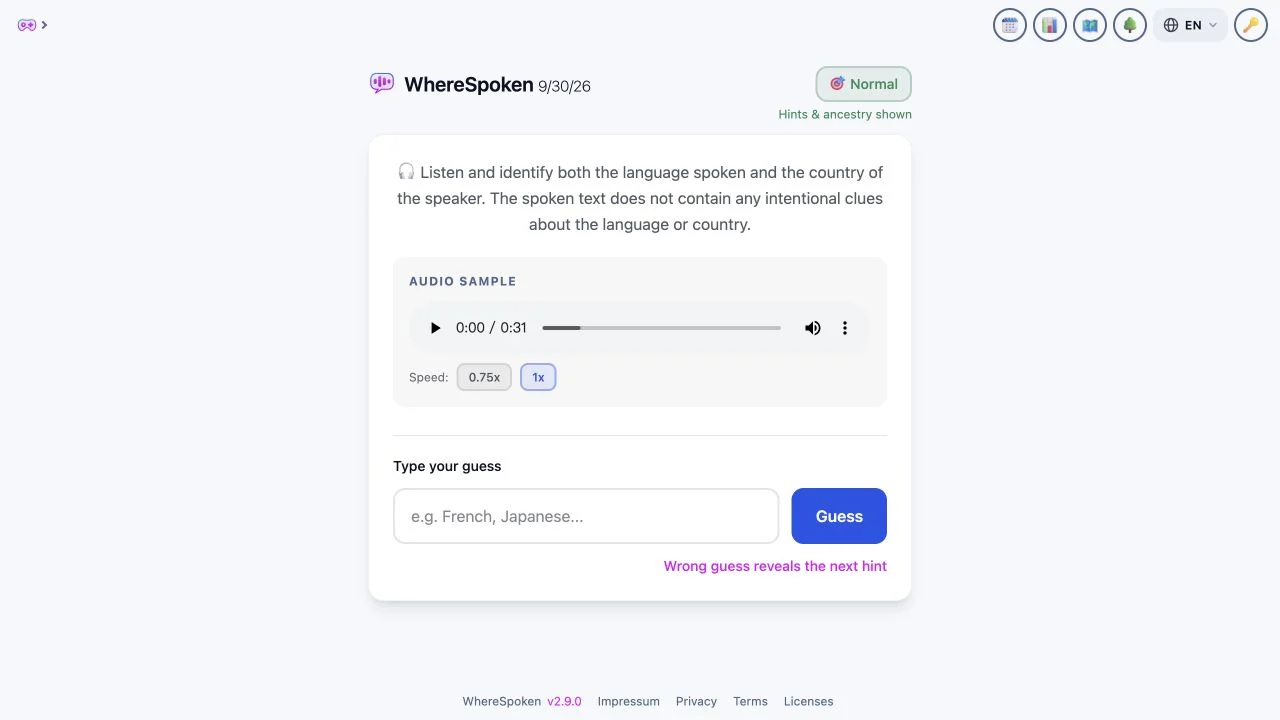
WhereSpoken asks for both a language and the country of the speaker. The instructions state that the text contains no intentional clues naming the language or country, so the puzzle depends on listening and deductions from feedback rather than waiting for a spoken place name.
The inspected Normal difficulty shows hints and ancestry, and a wrong guess reveals the next hint. Playback controls include a slower speed. Past puzzles, an exploration view and a language tree are linked from the same public interface, allowing the daily question to sit within a broader language-learning context.
The paired answer prevents a simple one-language, one-country shortcut. Language-family ancestry can narrow related languages, while geographic hints address the speaker’s country. Treat those as separate pieces of information: progress on one part of the answer does not automatically settle the other.
Write down a language candidate and a country candidate separately. This makes it easier to revise the wrong part without discarding a useful clue.
Listen normally for cadence, then try the slower setting for sound distinctions. Slowed speech changes rhythm, so compare the two impressions.
Use a revealed family relationship to exclude incompatible languages. A family label narrows the search; it does not by itself identify the speaker’s country.
You want a daily listening puzzle that connects language families with the more difficult question of where a speaker is from.
You want a fast four-option quiz or a written clue. WhereSpoken’s paired answer and progressive hints require a more deliberate listening session.
Choose a different game based on the experience you want.
The public instructions say the text contains no intentional clues about the language or country. Listen to the voice and use the revealed hints.
The inspected difficulty label says hints and ancestry are shown, and the interface explains that a wrong guess reveals the next hint.
Free entry
Recognize written languages through sentence packs organized by region and language family.
 Free entry
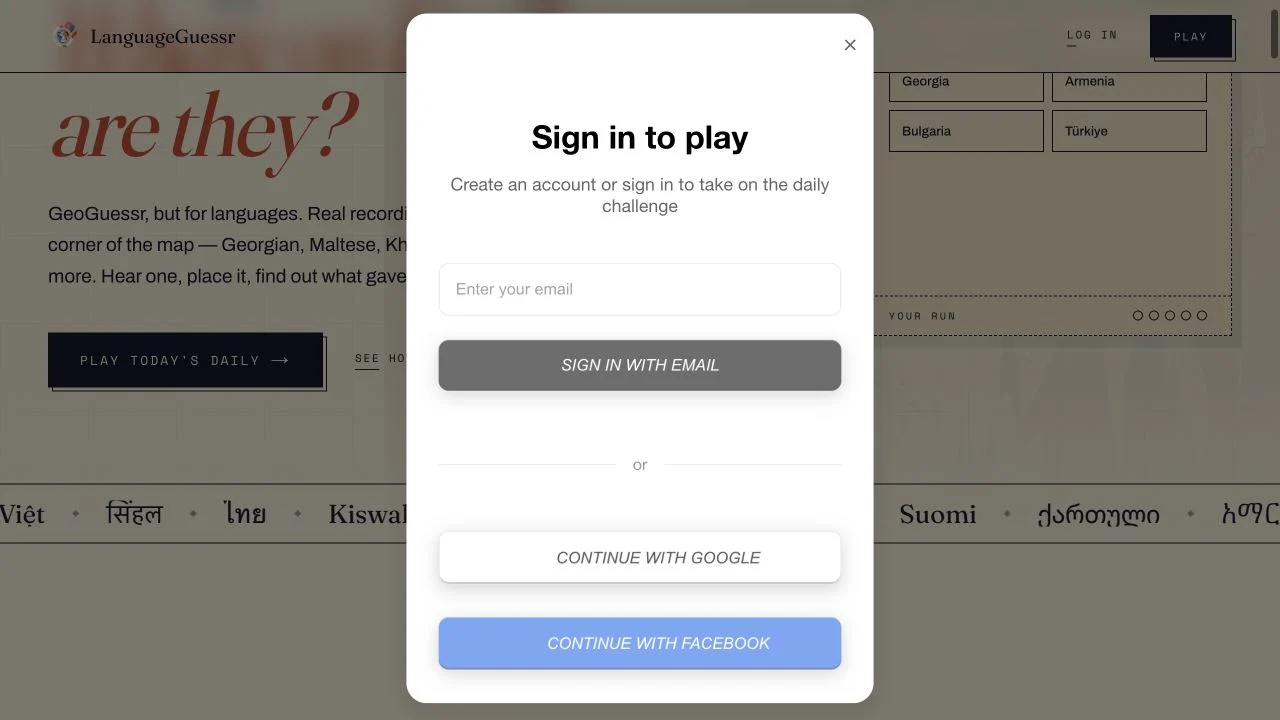
Hear a short speech recording and estimate where its language is spoken on the world map.
 Free entry
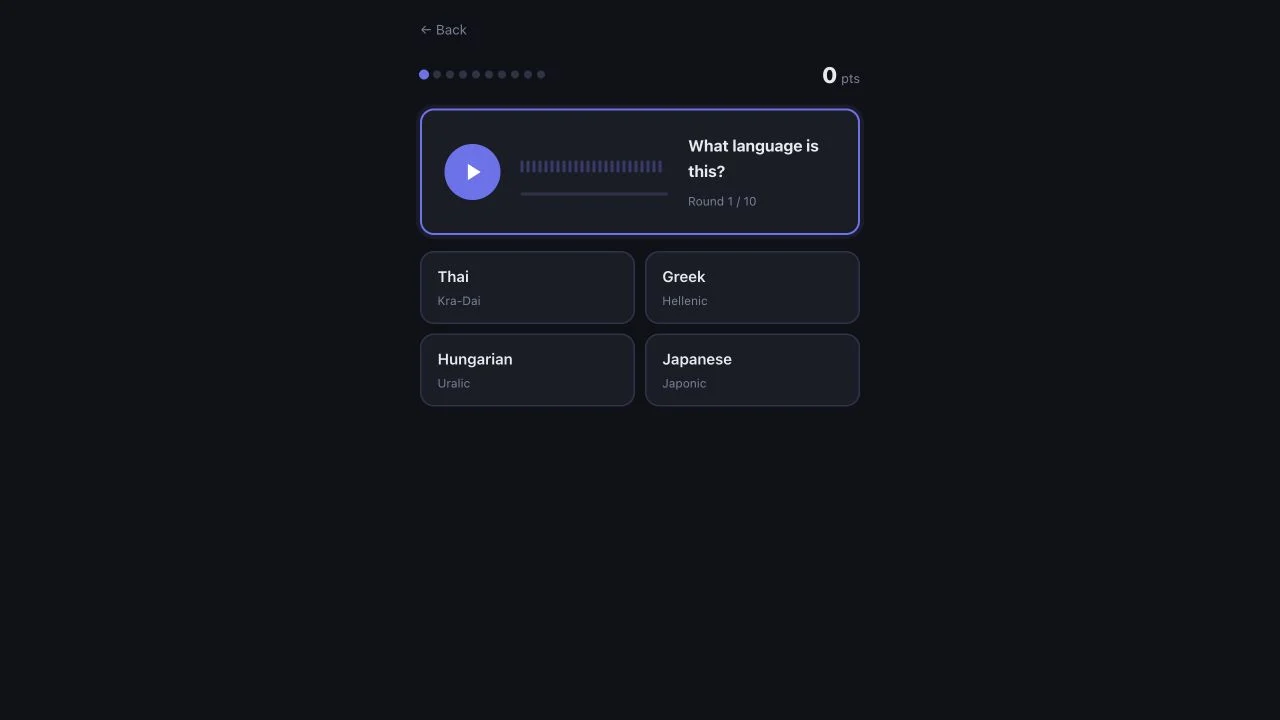
Identify a spoken language from four options across a ten-round audio quiz.