 Check access
GeoGuessr
Explore a street-view scene, follow the clues, and place your guess on the world map.
Street view
Buildings, terrain and remembered routes become evidence inside a video-game world. Begin with a map you know, compare landmarks with their surroundings and discover how well exploration has become spatial memory.
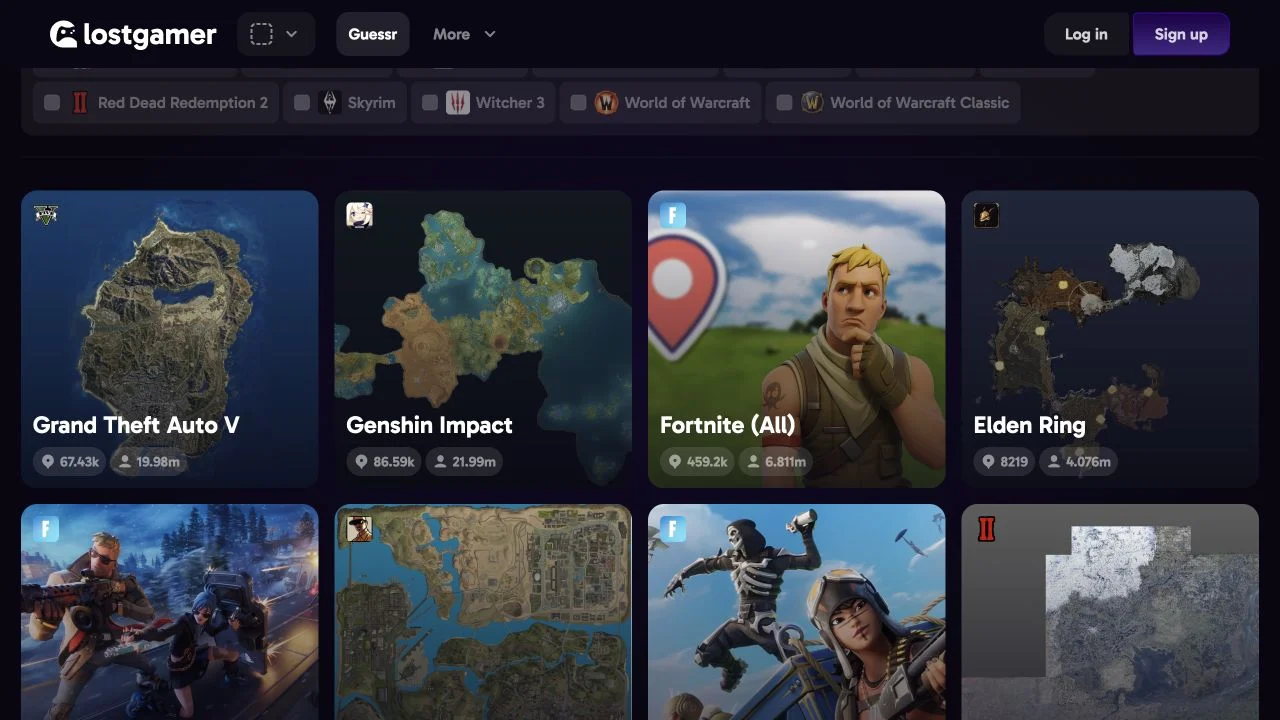
Lostgamer moves location guessing into video-game environments. Familiar terrain, architecture and landmarks become clues to where you are on a game map, so knowledge from exploring a virtual world finally has a practical use.
It belongs beside street-view games because the observation-and-map loop is similar, but its source material is different. Choose a world you know for an accessible first round, or a new one if you want the challenge to be entirely visual.
Lostgamer changes the evidence while retaining the location-guessing task. A landscape belongs to a fictional world, so recognizing a settlement style, mountain range or distinctive structure can place you on that world’s map. Knowledge gained while playing the original game can be useful, but it has to become spatial knowledge: knowing a landmark’s name is different from knowing how it relates to the surrounding terrain.
A familiar environment lets you learn the guessing controls while using landmarks you already know. Move to an unfamiliar world if you want a more purely visual challenge.
Compare slopes, shorelines, roads and large structures with the game map. A landmark becomes more useful when its direction and neighboring terrain also fit your proposed location.
Many fictional worlds reuse building styles or landscape assets. Find a second clue, such as a coastline or unique structure, before deciding that a recognizable texture proves the region.
You have spent time exploring game worlds and want a new way to use that knowledge. It suits players who remember routes and landmarks from virtual environments more readily than real-world signs.
Your goal is learning real countries or planning a group game immediately. Its maps are fictional, and the public multiplayer entry was unavailable at our check; this guide covers the solo entry.
Choose a different game based on the experience you want.
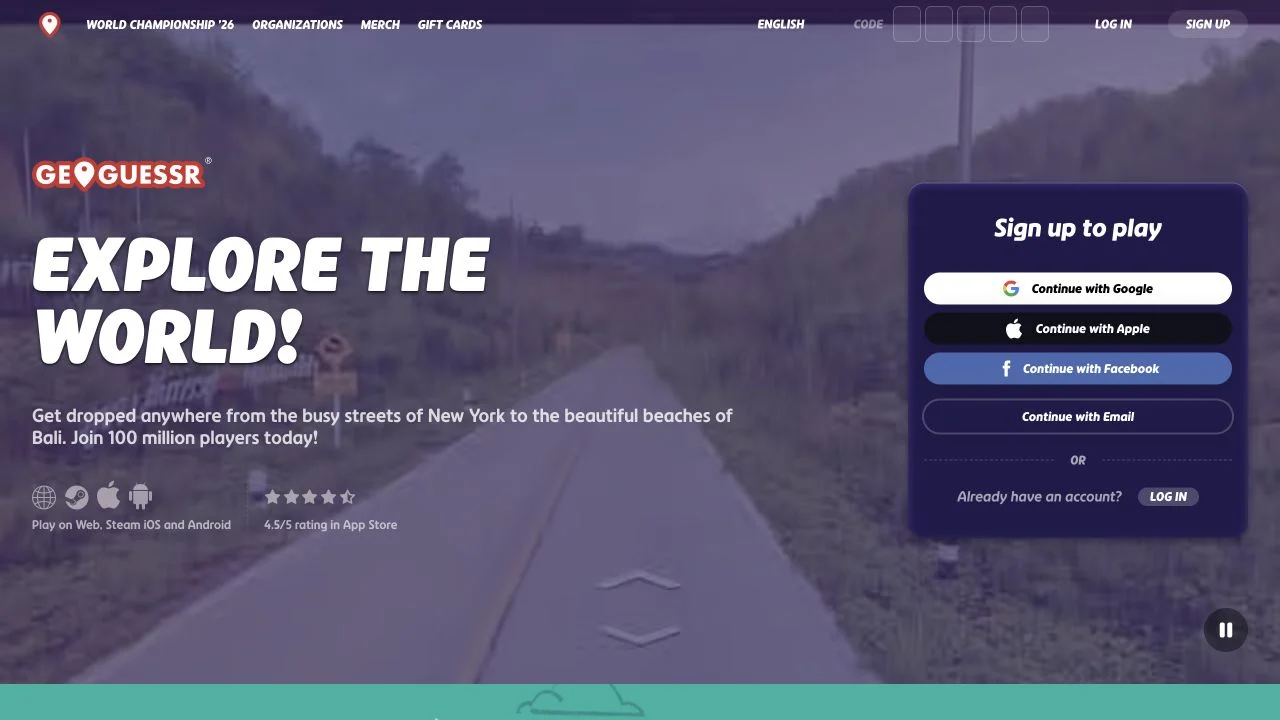
Choose GeoGuessr to apply the observation-and-map process to real-world locations. Road language, geography and Street View coverage replace the fictional world’s landmarks and terrain.
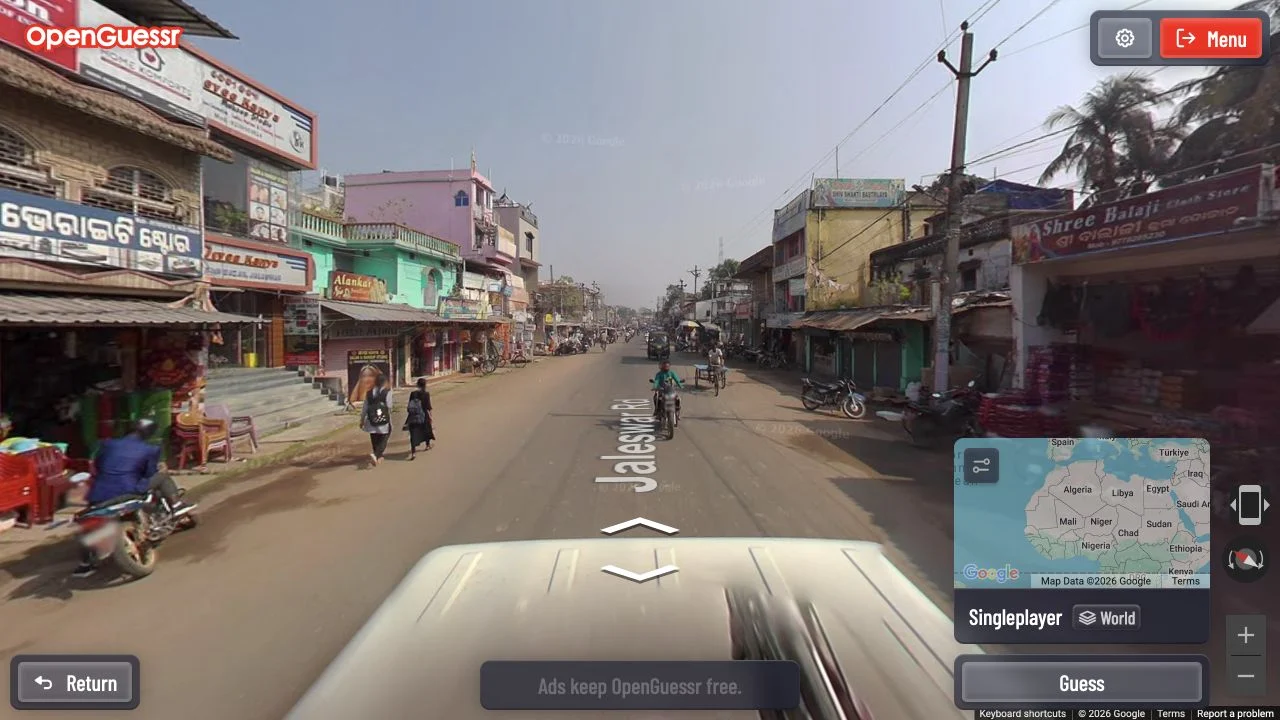
Choose OpenGuessr for a free real-world introduction. Its Famous Places option can provide a recognizable starting point if landmark deduction is what you enjoy in Lostgamer.
It practices observation and spatial reasoning, but its answers belong to fictional maps. Use a real-world guessing game or map quiz for country and regional knowledge.
Familiarity helps with landmarks, but you can still compare visible terrain with the supplied world map. An unfamiliar environment makes the task more about visual deduction than memory.
Check access
Explore a street-view scene, follow the clues, and place your guess on the world map.
 Free entry
A free street-view game with unlimited exploration and rooms for friends.
 Free entry
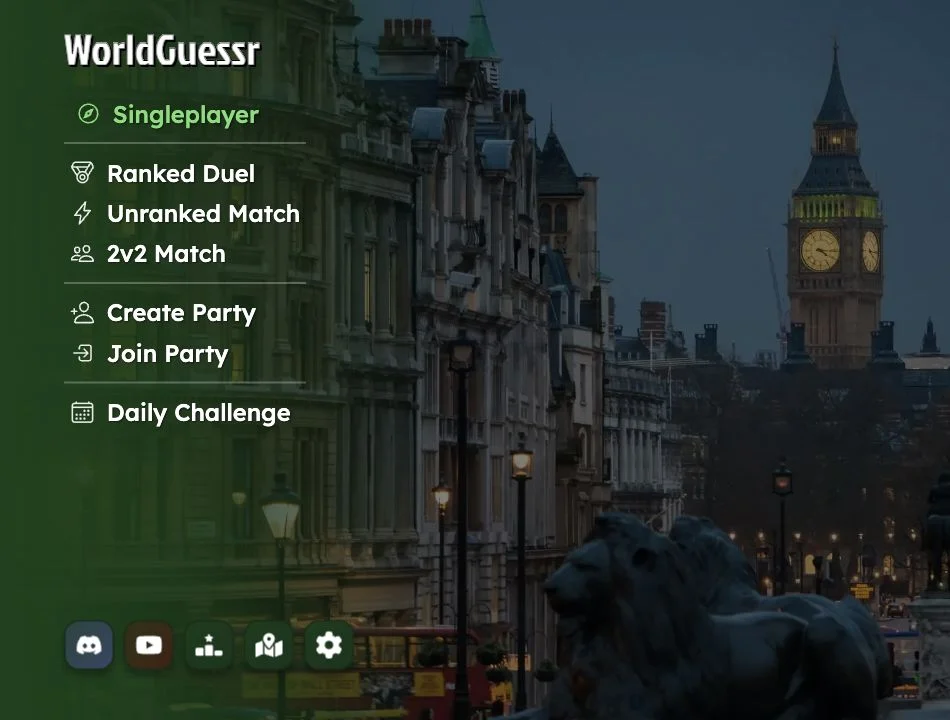
Free browser location guessing with street views and multiplayer options.